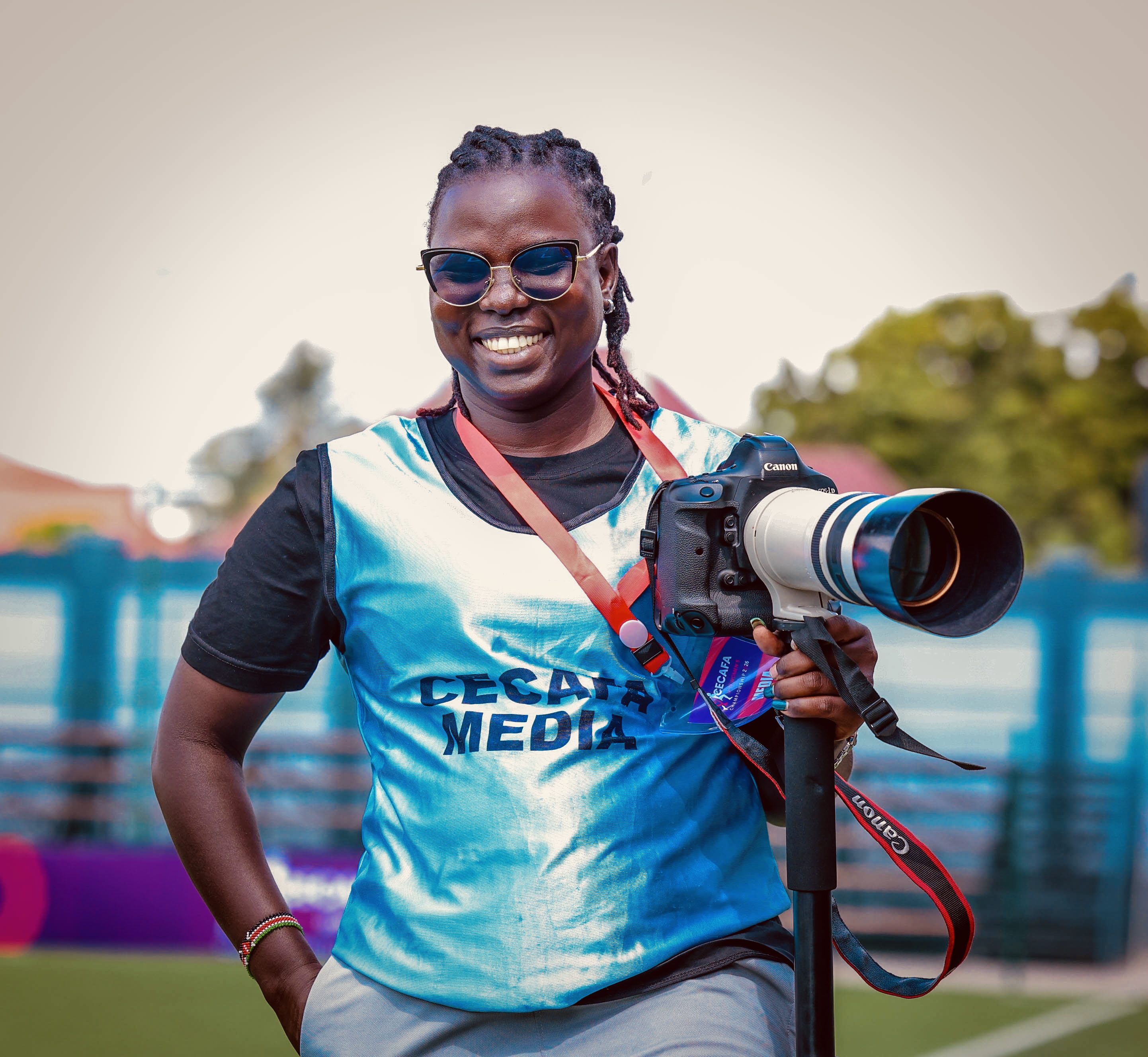
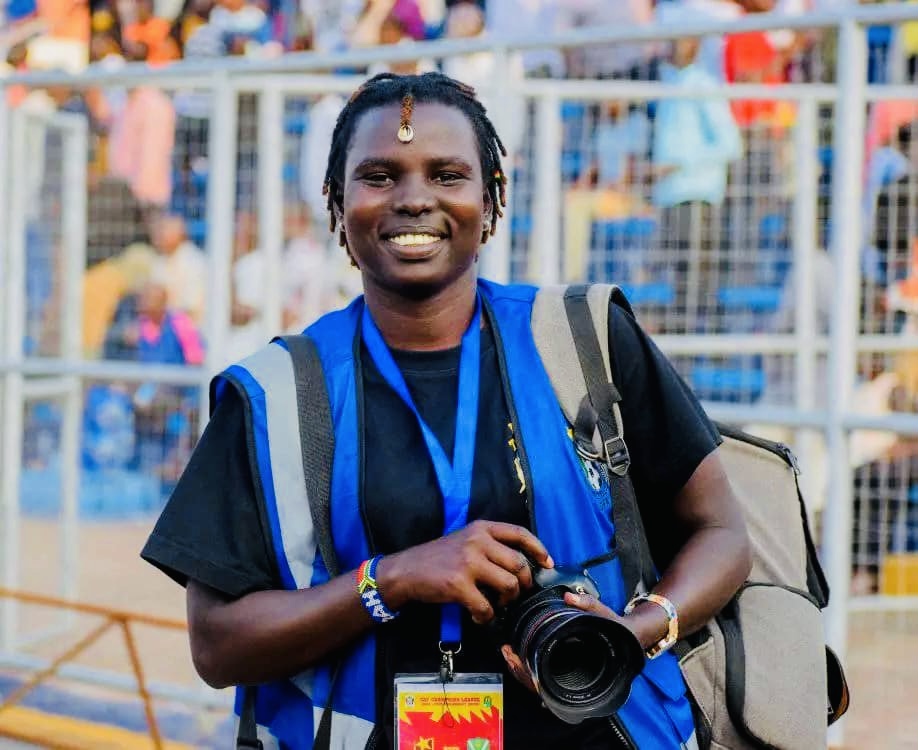
Sarah Poni Jacob is a media officer at the South Sudan Football Association. A former player, she is now the only woman in the FA’s media department, traveling with every national team from the U17s to the senior teams. Part photographer, writer, designer and press coach, her role touches all aspects of sports media.
In this interview, Sarah shares pivotal points in her life - her own playing career, getting started on the radio, societal pressure, working at the FA and building a career in media.
The interview has been condensed and lightly edited for grammar and clarity.
[ Background ]
I already had an interest in football before (working in football), but when I was in school, we had no football competition, it was only netball - and I wasn’t not good at that! There were already some women’s clubs playing and I tried going for training but my brothers wouldn’t allow me. At the time people believed football was only for boys or for men.
After some years, the minister of general education introduced co-curricular activities, football was introduced and for the first time, every school must have a women’s team as well. At first they didn’t give us the chance because there were older girls in the school, but they didn’t win any games!
The next year, there was a conflict in the country and many people left. And one thing that really motivated me was seeing the people who were athletes in the school, some of them were studying for free because of their role on a sports team. I needed to get this opportunity - at that time, the only person who was taking care of us and supporting us died and life got so hard that even sitting for my primary certificate became really difficult. I was living in an orphanage and didn’t have money to sit for the primary school exams, the forms were ready to be sent back to Juba but I couldn’t pay. The headmistress had to sacrifice and pay for me. That motivated me to work hard and perform well in class and on the pitch. So, I tried, I was given a chance and I was good. We even reached the final, where we lost. I was also the captain for the volleyball team and we won there.
After the school competitions, I knew I was a good footballer. People started recognizing my name and they’d ask my brothers, ‘oh, your sister is Sarah, the one who plays football?’ I felt like a small celebrity. That gave me motivation.
[ National team and professional career ]
Then, one day we were brought to the capital to play in a national competition. After this I was called up to the national team for the first time. Back at home, I was so happy and my school gave me a warm welcome, that was the best moment. But, the school didn’t give me any special treatment! When it was time for exams, there was no difference between you and the rest just because you played football. At that time, I started focusing more on football and I left my studies.
There is a team called Yei Joint Stars, it’s one of the women's teams that plays regularly in CAF and CECAFA competitions, when that team was formed, we were the first players in the team.
Things were going well for the team but I was one of the players who did not get enough time to play. We trained but we didn’t play. It was a very disappointing period. By that time, I was already on the radio and I asked myself, ‘what am I doing here if I’m not playing?’
I called the owner of the radio and told them I wanted to go back. I feel if I’d have continued in the team, I wouldn’t have become who I am today.
[ How did you get started on the radio? ]
When I was 11, there was a children’s program at a local radio station that happened every Saturday for one hour. I was in the student magazine and so I got a chance to be invited. I remember we were 3 kids, I had to speak Arabic, another spoke English and one spoke in a local language. It was my first time in this kind of place, I didn’t even know what a ‘studio’ was. It was like a dream!
I spoke well and our voices were recorded and were replayed each time the host entered the studio or at the end of a program. Then, when I went to school, lots of different people told me they heard my voice on the radio. I liked that if you go on the radio, you can become a famous person - for example, everyone knows the host - one day I wanted to become like her.
Then, later, at a big independence day celebration I saw a group of people who looked different. They were well dressed, very smart and holding cameras and recorders. One of my friends told me those are journalists. Look how smart they are, I’d love that job! I went to one and asked him his name, he told me, Daniel Friday. I told him, I want to become like him. He looked at me and said, ‘I wish you well!’.
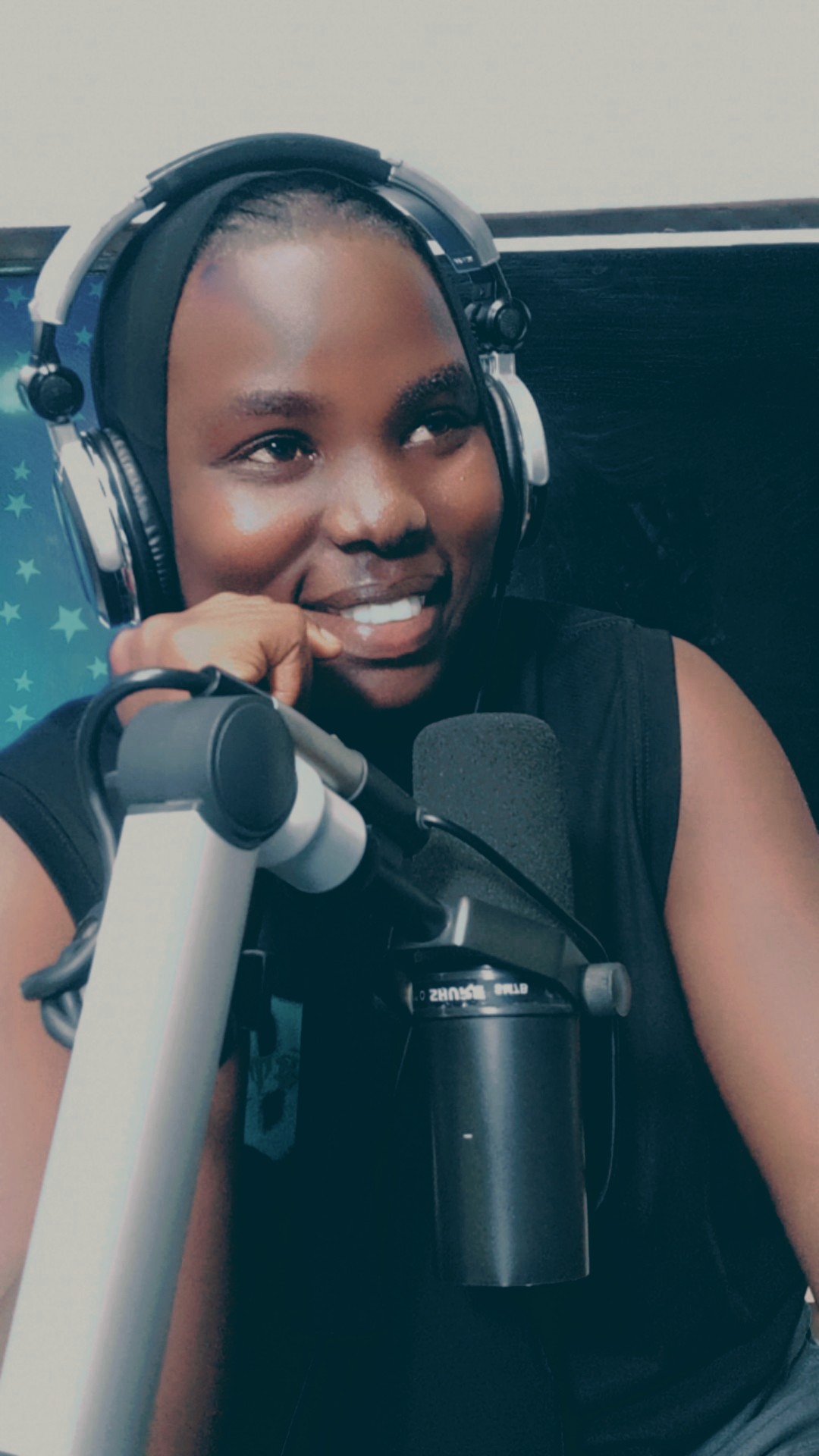
"I liked that if you go on the radio, you can become a famous person"
[ Getting started in football media ]
After that, I started talking to people who worked at the radio. They told me to go to school, go to university and I’d learn all about it but first, listen to your favorite presenter and listen to her intro, how she presents the program and how she ends the program.
So I started listening to the radio more regularly - until my brothers started interrupting! The program was on Saturday and overlapped with a sports program on a different radio station. My brothers told me we had to finish their sports show before I could listen, but when they finished, my program was already over!
Before I started playing, I never liked sports, but I decided to try and listen to their program. I started enjoying the show, there was one presenter, the way he analyzed the comments and his presentation was really good - I fell in love with that program.
Then I asked myself, if ladies do not present this program, how do I start? Will I be able to do that? I started going to the video hall and watching football - my brothers told me I was crazy, ladies do not watch football and to focus on my work and just listen to the program. But I was so stubborn, once I decide something, I do it, whether someone likes it or not.
I continued with that until one day when I came to Juba during COVID. I was at one of the grounds near my sister’s place and one gentleman came up to me and asked if I played football. I told him yes but not anymore. He asked me, ‘how would you like to be interviewed on the radio?’
On Saturday, I went to the radio station, it was a great interview and the presenter told his colleague that I spoke well and he thought I could be a very good sports analyst. I started coming to the program to sit in the studio and listen to the show. After 2 weeks though, I started going on the air!
I kept studying. I was really focused on trying to pronounce the European names properly. When I went home, I went on YouTube to study the pronunciations and videos of players introducing themselves. Somehow, I managed to get more experience until one day I was alone and left to present the program on my own, just like that.
"my brothers told me I was crazy, ladies do not watch football and to focus on my work and just listen to the program. But I was so stubborn, once I decide something, I do it, whether someone likes it or not"
[ Working with the football association ]
Then I started to follow competitions around the country. The international or national sports and competitions you can get via the media but with local sports, you can’t, you need to go on the ground and find out.
While attending these events, some people from the Federation saw me - because I was the only lady. When I completed my secondary school, I told a colleague who worked at the Federation that I was interested in working there. He thought, because they didn’t have a woman in the media department, I might have a good chance. I wrote a letter to the Secretary General expressing my interest.
They thought it was a good opportunity for the women’s teams to have a female media officer. But first, I had to go back to school and finish secondary school. In the school, I was already part of the journalism club and had won an election to become the head of journalism in the school. I started going to an institution for journalism classes after my school classes. It was intense. Some colleagues told me, ‘if you’re not serious, you will fail’ and all that - even the lecturer said that often they start with 30 students and end with 10!
Anyway, when I came back to Juba, people knew me and I needed to get a passport for my first journey with the national team.
[ What do you do in your role at the FA today? ]
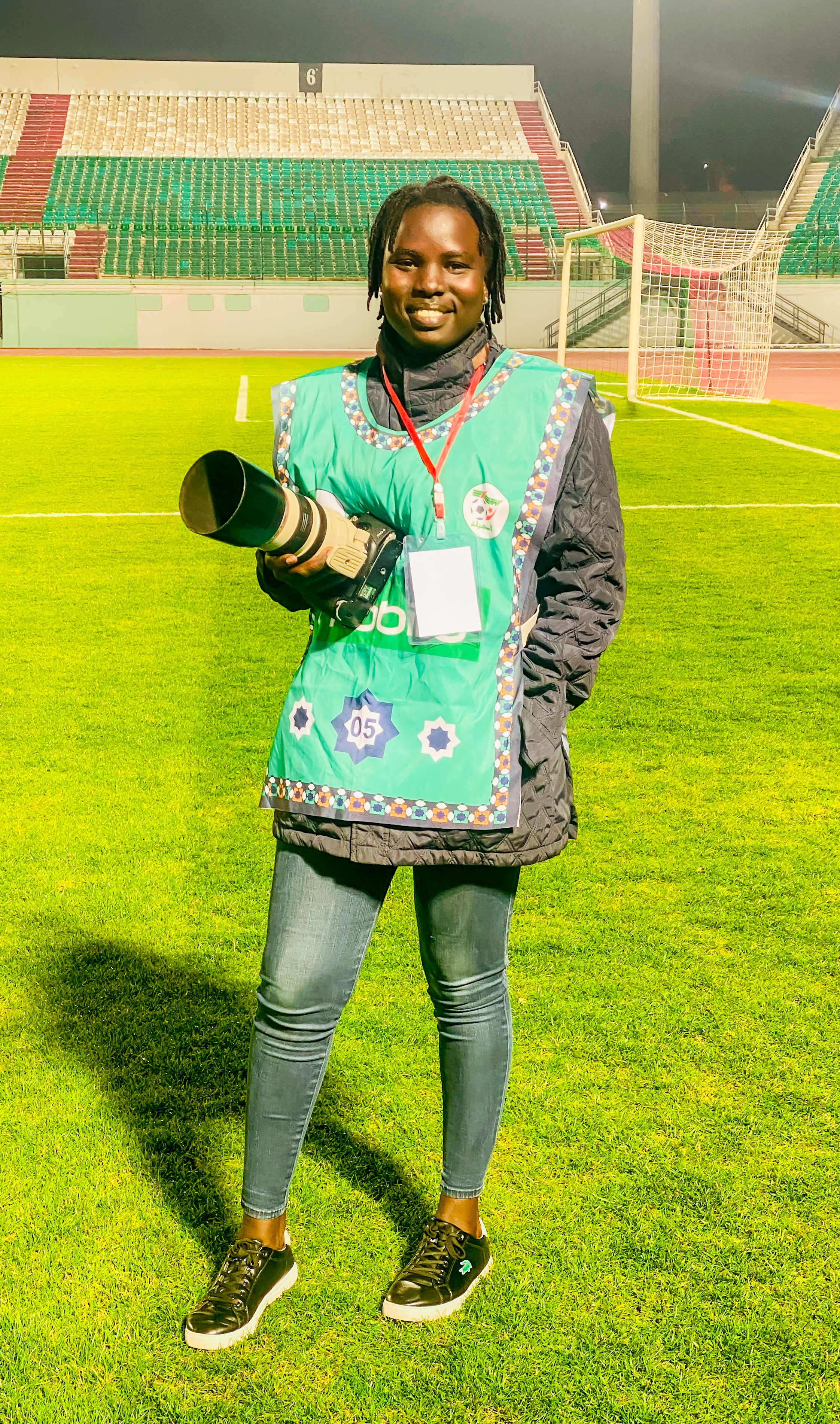
When I started at the federation in 2023, I worked as a photographer, but now my description is as a media officer. I do photography, write, design and I'm often the admin of the federation’s web page.
Apart from that, I travel with the national teams. I’ve traveled with all the national teams, men’s, women’s, U20, U17, etc. Usually one person from the media team goes. So it’s up to you to take photos, write reports and prepare the players and coaches for press conferences. Everything related to the media side is something I do.
[ Do you also follow the national and regional leagues in South Sudan or just the national teams? ]
I do follow the competitions, but mostly when it is in the national stage, like the National League, the National Cup and the Premier League. My goal is always to cover everything but usually I don’t have enough time to go and attend the local competitions very often.
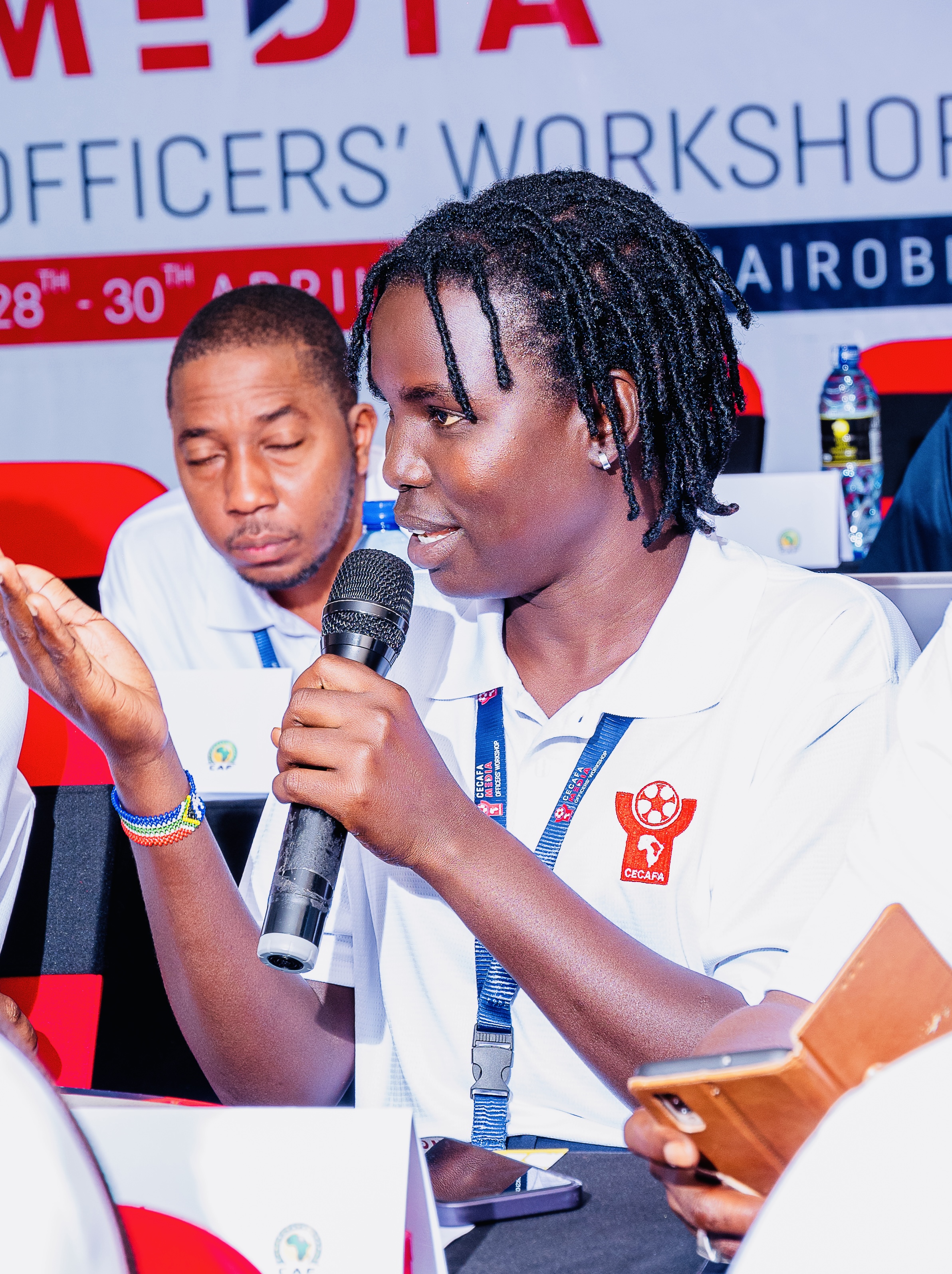
[ You were recently at the CAF/CECAFA training for media officers in Kenya - what was this like? What kinds of things did you learn there? ]
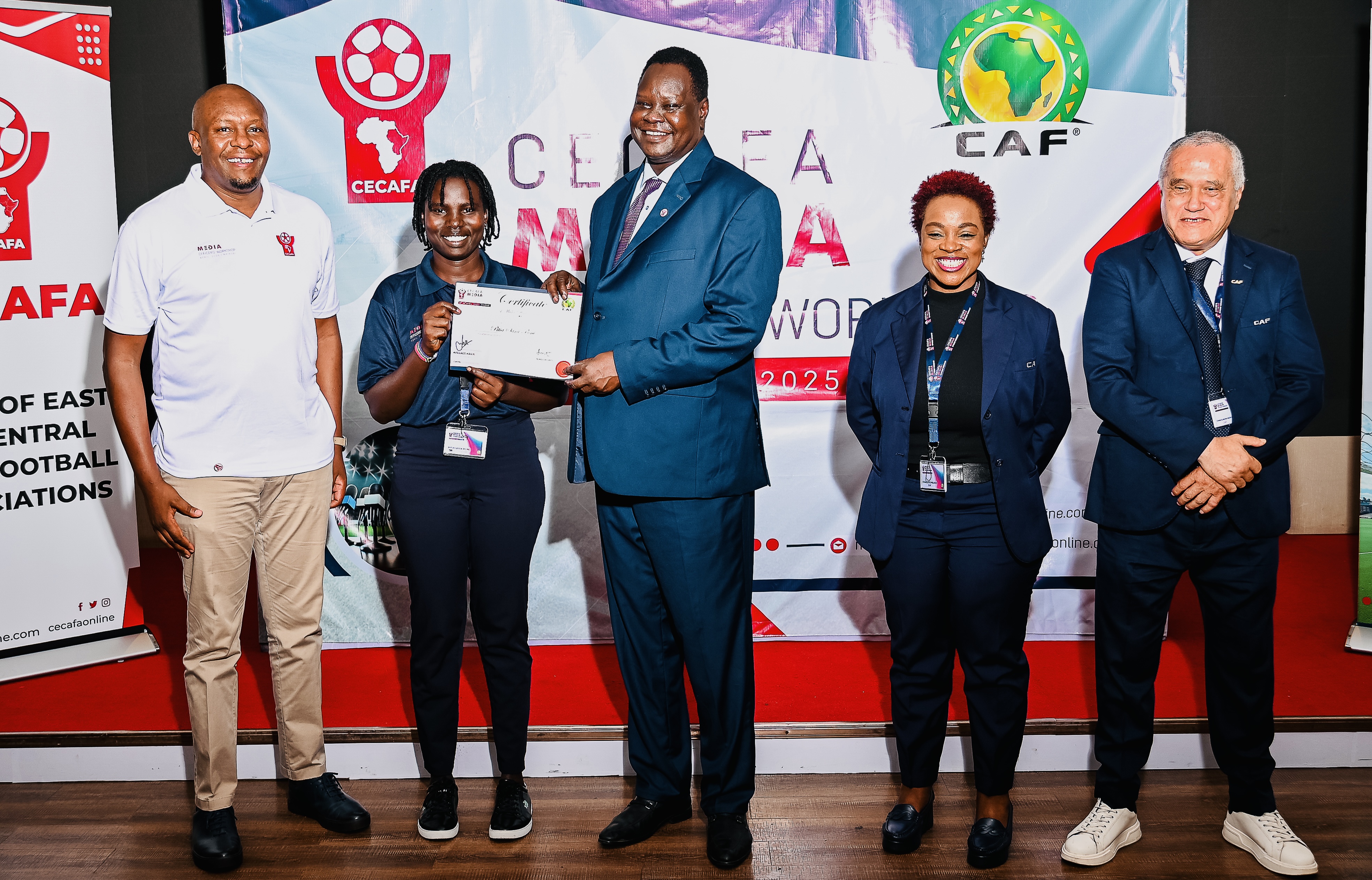
It was great. It was focused on capacity building - mainly, to assist journalists, strengthen communications skills and also to prepare them for international competitions, especially the upcoming 2027 Africa Cup of Nations in Kenya, Tanzania and Uganda.
The facilitators were experts from CAF and it was a great experience to be developed by people who have covered World Cups and AFCONs - this is first class information for me!
Personally, I learned a lot about my role as a media officer. How things should be done with the national team or with a club, from the first press conference to the social media platforms to branding and marketing. It’s funny, after the training, I told my colleagues we have been doing the opposite at the federation!
Now, I’m much more prepared and ready for each trip and have improved a lot in my role. Since then, I’ve never had any concerns when I travel with the national team.
"it was a great experience to be developed by people who have covered World Cups and AFCONs"
[ Sports journalism in South Sudan ]
Before I started in sports media, I had wanted to become ‘just a journalist’. I loved politics and history was my favorite subject. But when I got into sports, I realized in sports, the freedom of speech is better than outside sports. With sports, you talk about things that have happened, and there are people who are ready to defend you - you cannot ‘create’ things when it comes to sports because you’re talking about something that has happened publicly and thousands of people already know.
Everything that involves politics is a problem. My family was not supportive of working in journalism. My aunt told me that journalists die often and I’d have to go to the front line. But there are many kinds of journalism! So, I had to switch to sports because I want to be free and do my work without anyone pressuring me.
[ What are some of your goals for the future? ]
I would love to become an international sports journalist and attend big events like the World Cup, the Olympics and the Africa Cup of Nations. I want to be able to travel on my own for these competitions and have my own equipment. This is an ambition of mine because I’ve had good opportunities to go for the CAF Women's Champions League CECAFA Qualifiers but I couldn’t make it because I don’t have my own camera.
So, that’s where I want to be. I’ll pursue a few other things too, like a diploma in Film and TV production, but I want to stay in this sports career.