So much of the focus in football is on the elite level, but, as we’ve seen many times, to really grow football in a meaningful way, you need to start from the bottom up. That’s where >99% of active players are anyway!
Ruža Ilić Pavkov is a force of nature involved in so many of the good parts of football. Her work goes far beyond her title as Grassroots Manager, she has worked extensively on everything from big events, accessibility, tech, school futsal tournaments, post-career planning for players and especially in the development of the women’s game.
In this interview, Ruža shares the unique path she’s taken in her career so far. From many firsts - including the youngest female referee in Europe and the youngest employee at the University of Belgrade (!) to leading projects that impact players, fans and communities across Serbian and European football.
The interview has been condensed and lightly edited for grammar and clarity.
[ How did you get into football? ]
I fell in love with football before I was even born. 9 months before I was born, Red Star won the Champions League, so you can see how my parents celebrated! Initially, I was expected to be born on the 3rd of March and my parents asked if they can move the procedure to the 4th because this is the birthday of Red Star - but in the end I was born two days before. Literally, my first steps as a baby were at the Red Star stadium.
I was born into a futsal family, my parents were into sports, especially football and futsal. My dad was a futsal coach and organized futsal tournaments. In my family, we don’t have ‘family lunches’, we gather to watch football and the national team in any sport, so sports are part of the culture of my family.
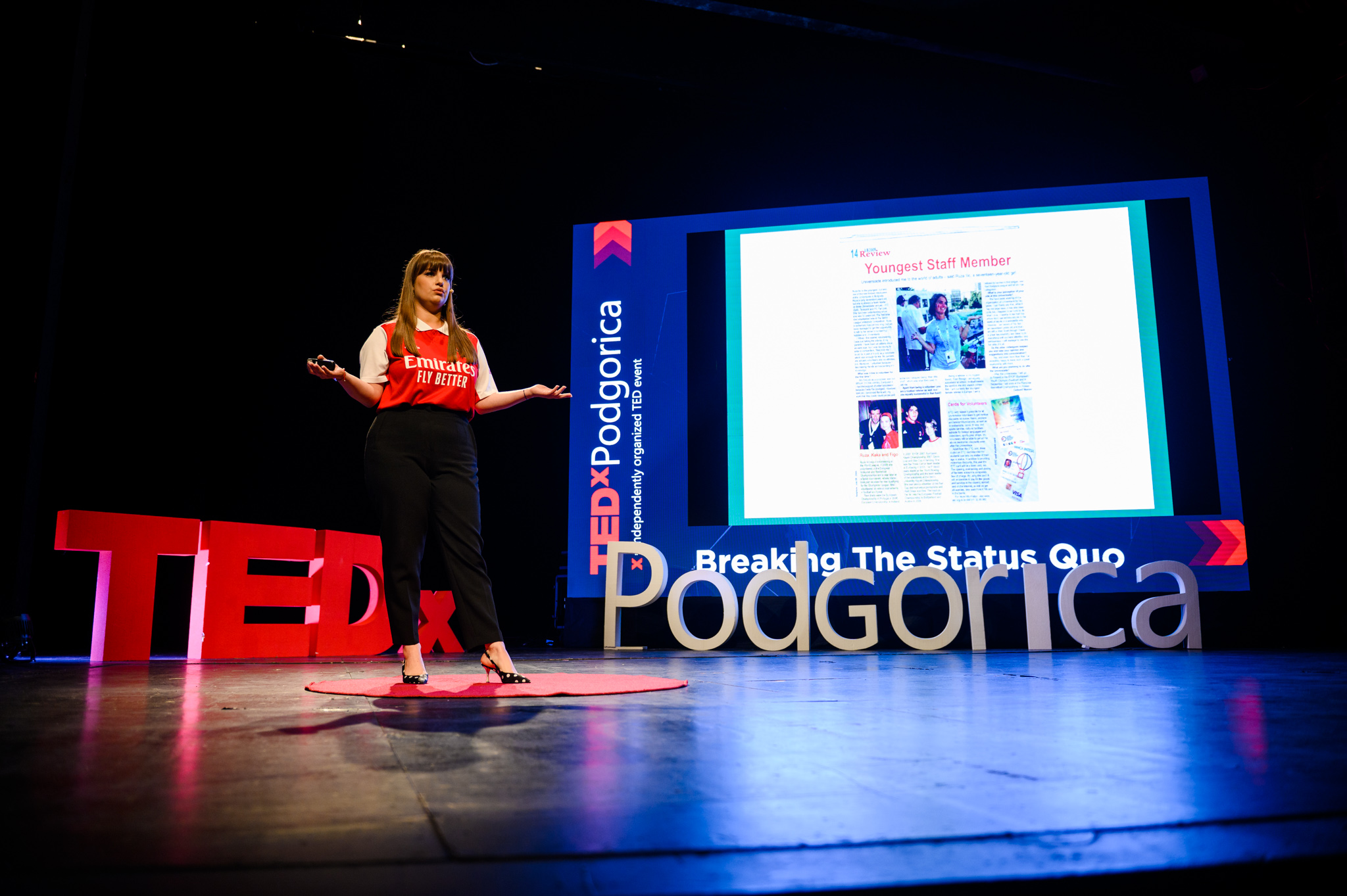
At the age of 4, I fell in love with Arsenal Football Club, because this was the first game I ever watched on TV. It was the beginning of the Arsène Wenger era and to me, he looked kind of funny, he was super skinny in his suit, and I was like, oh, he’s so cool looking! After that, the invincibles came and of course, it was normal to be hooked on Arsenal. I’ve realized over the years though, that supporting Arsenal shows a high level of perseverance and loyalty!
I was also an athlete from a young age, I did Aikido, played volleyball and of course, football. Football was always my first love and biggest passion. I spent so much time around the game, especially with my dad, who was always taking me with him to futsal tournaments.
"sports are part of the culture of my family"
[ First jobs in football ]
After playing football in school, I wanted to play in a club. But at the time, in Belgrade, there was no proper football club for girls that my parents could take me to and the only option was to move, like 300 kilometers from home - which was not an option. So, they suggested, why not wait a little bit and then start a refereeing career? I thought, okay, let’s try. At one time, I was the youngest female referee in Europe at the age of 16.
Even before that, I had started volunteering at big sports - and non-sports - events since I was 12. At 15, I helped organize events like Eurovision and at 17, I was the youngest staff member at the University of Belgrade.
Around this time, before university, I got to meet the Head of Grassroots at the FA of Serbia, who was pretty interested in the fact that I was so young but so experienced in terms of events, university aid and running huge teams. He told me, ‘I was looking for someone like you for years!’ and asked me to join him in his department.
I joined the federation in 2011 for the first time as the assistant in the department I’m now running. I was there for 5 years and my last project at the time was the Futsal Euro’s in 2016. It was, of course, really special for Serbia - but also for me, I’d started in futsal through my dad, and to work the first Futsal Euro’s in my country was one of the most amazing things.
So, even though I have bachelor’s and master's degrees in international economics and sports management, I can always say that my education followed my career - my career didn’t come after my education, which is pretty amazing because you already get to experience the reality of working in the sports industry in various ways. You also get to test what you learn and see if it’s actually ‘real’, or if it's just academic stuff.
[ Leaving the FA and Sportifico ]
After the Futsal Euro’s, I left the federation and I was doing different things for a couple of years, where I developed skills in marketing, sponsorships and media. I ended up working in an IT startup, Sportifico, which was out of nowhere and really took me out of my comfort zone. It was a really good addition to my personal and professional development. I really enjoyed the IT and startup world because it’s pretty dynamic, creative and you get to test a lot of things that would be impossible in the corporate world.
The other important ‘discovery’ from my time at Sportifico was my feelings towards the women’s game. Sportifico was a social network for players and coaches and we became very drawn to the women’s side of the game. Our reach was bigger there and brands were more interested. At that time, my experience was mostly in elite football and men’s football but this brought me more into the women’s game than ever before.
After Sportifico, with my colleague Alexandra, we decided to develop a platform for women’s football only. We were doing amazing and hoping to score the big investment and go big and everything, but then COVID hit. I won’t share more because I still believe that there will come a perfect time for this idea to be developed!
[ Return to the FA and current role ]
Then I got the invitation to return to the Federation and take over the grassroots department, which has since become much more than a single role.
Today, my work naturally extends across several areas. I’m involved in international projects with FIFA and UEFA, including the FIFA Talent Development Scheme, as well as educational programmes and collaborations with European partners. I’m also leading, from the Serbian side, the organization of the UEFA European Under-21 Championship 2027, and contributing to the Federation’s bidding processes for major competitions.
While it might sound like a lot at first, many of these responsibilities are closely connected and actually support one another. What makes it all work is the team, both the core group I work with every day and a wider network of colleagues and collaborators. One of the things I’m particularly proud of is the FA of Serbia Volunteers programme, which brought together people who genuinely want to contribute. Without that collective effort, none of this would really be possible.
[ Who/what department(s) do you work most closely with at the FA? ]
I operate across both the technical and sports departments, working closely with and reporting to the Technical Director of the FA of Serbia, Ranko Stojić, whose experience in football, both on and off the pitch, brings a valuable perspective to our work.
At the same time, a large part of my role involves working with colleagues on the development side of the sports sector. Grassroots football, by definition, covers everything outside the elite level, and while elite football is the most visible, it represents only a small part of the overall system. The amateur and semi-professional game, youth football, disability football, and formats like futsal all fall within that space.
Because of that, my day-to-day work is naturally collaborative, involving different departments and a wide network of people across the country. Football in Serbia doesn’t happen from an office in Belgrade; it happens on pitches everywhere, and that’s why this constant connection with the field and the people working in it is essential.
[ How is your work assessed? ]
In grassroots football, you can never get to the finish line, because there's always something new that you should develop. I'll give you an example, now, I’m really into developing futsal and supporting futsal as one of the strategic goals - but, I’m not doing anything in beach soccer. So, from one side, you can see success in futsal, but you can say, what about beach soccer? There's always something you cannot tackle at the time or something you can’t prioritize.
At the moment, the main focuses are on growing the game, then the safety of the game and also football in schools. For example, a couple of years ago, we helped bring football back into schools as part of the regular curriculum and from this year, we managed to partner with the Serbian School Sports Association to start a school futsal competition. At these competitions, all the futsal national teams’ head coaches are present, looking for the children who maybe are not playing futsal on a regular basis, but they are super talented and might not even be aware of the potential and possibilities.
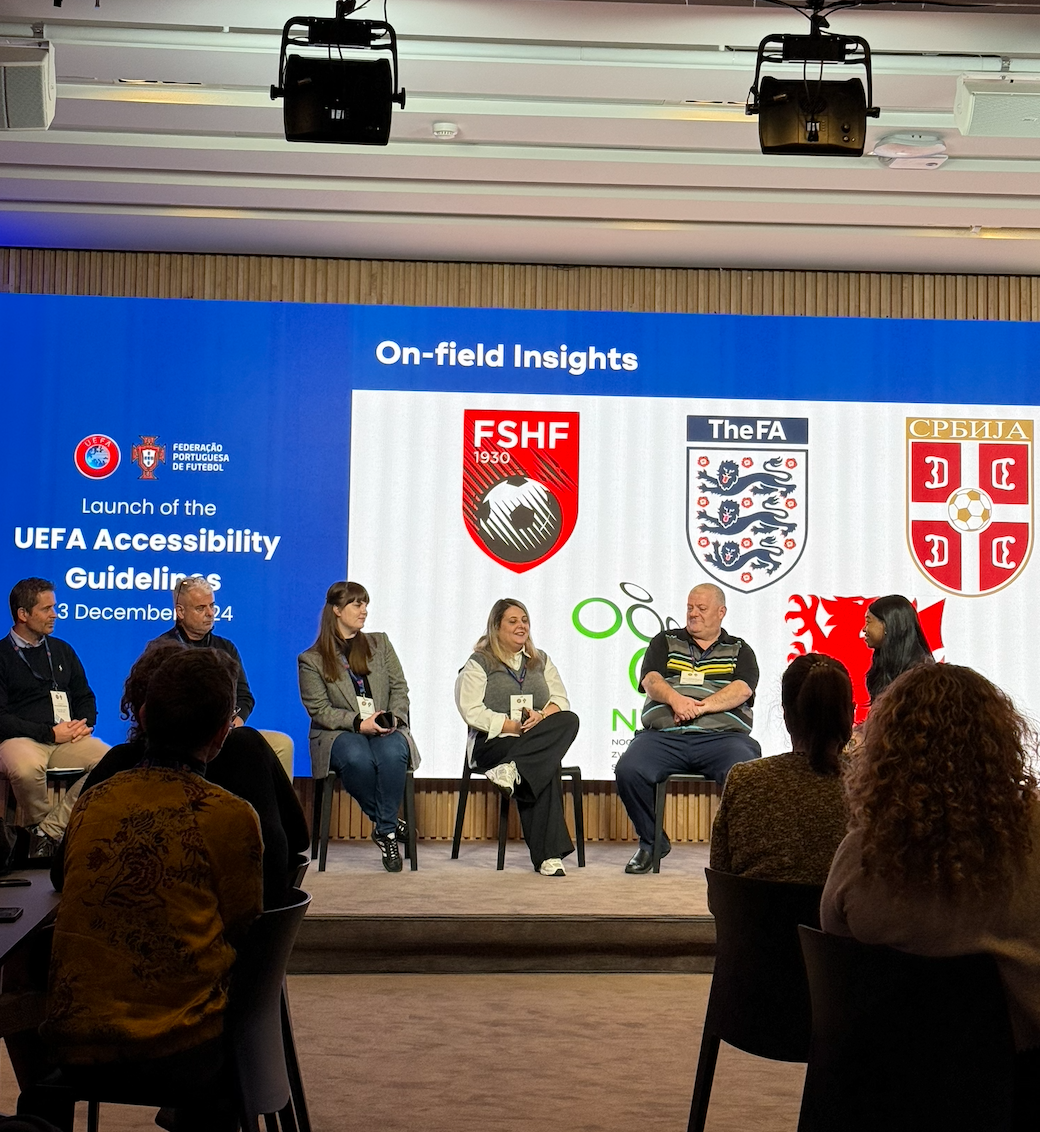
You can get recognition from outside - just recently, after years and years of developing disability initiatives, we won a silver medal from UEFA. But you can also see the results from the inside. For example, when a national team is playing and you have the stadium packed with kids - those kids come from the grassroots programs. It’s about creating this love and passion for football from a young age. Because, the idea of grassroots is to keep people hooked on football for their lifetime, not only while they are playing - because most will not end up in the elite side, some will get injured, some will give up, some will get disappointed, but you always want them to come back and watch a game, or support the national team and things like that.
"In grassroots football, you can never get to the finish line, because there's always something new that you should develop"
[ How do you think about doing all these different things vs ‘specializing’ on one specific topic/niche? ]
It’s not always easy to define exactly what I do, because my role naturally spans across different areas of the industry. Over time, I’ve had the opportunity to be involved in a wide range of topics, which helped me build a broader understanding of how different parts of football connect and function together.
I’ve always been curious and open to learning, and I think that’s what allowed me to grow into roles with more responsibility. When the moment comes to take on something bigger, it feels less like a leap and more like a continuation, because the knowledge and experience are already meaningfully connected.
I’ve worked at the World Cup and at Champions League Finals and a lot of other big and prestigious events, but I'm still passionate about some basics that made me fall in love with working in this organization. Things like grassroots, disability football, safeguarding, accessibility - like, bringing fans in wheelchairs to the stadium. These roles can easily be filled by someone else, but they make me alive, they make me feel the purest joy that elite football can never do. Even though we might all cry because of the titles we won or lost, or the games or penalties, etc - I really, really love to stay connected to the human side of the game.
And, also, I stopped being a referee in 2014, because I realized that a career in refereeing and a career on this side of the pitch aren’t compatible. That means, at some point, you have to choose and I chose this side - which I’ve never regretted.
At the moment, I have received a full scholarship for the FIFA Technical Leadership Diploma to further develop my career as a technical leader in football - and these are the things that if I focused solely on the refereeing side, I probably wouldn’t get. And with refereeing, you have some of the same risks as with active playing, you can get injured, your career can stop in a minute.
Still, I think in my roles and in my jobs, I’ve been shaped a lot by being a referee. You understand the pain and suffering of the teams. As a referee, you don’t start in the best stadiums, you go to the villages and into the lowest levels of the game. When you’ve gone through that, then people can trust you more and you can support them in a proper way.
"These roles can easily be filled by someone else, but they make me alive, they make me feel the purest joy that elite football can never do"
[ Where did this urgency (e.g. to be the first at everything) come from? ]
It's so spontaneous. When you start volunteering, you get to be amazed and fascinated by the world around you. The first time I was in Belgrade Arena as a volunteer when I was 12, all the lights, all the action, music, people, you get a rush of adrenaline and then you’re hooked and it’s really fun.
Later at the Universiade, I sometimes say, volunteering introduced me to the world of adults in a pretty fun way. I almost didn’t even notice the transition from volunteer to staff. To me it was from ‘fun to fun’.
And then, everything else that happened - when you work in football, in sports, new ideas and opportunities are coming spontaneously, things are coming from fun. I really adore that. It’s not like I was dreaming as a kid about working for the football federation of Serbia, it just comes - the more you progress in the industry and in life, the more you’ll find those environments for yourself where you just fit in.
At the moment, when I see myself, I’m going into all these different directions - and sometimes I go overboard and take too much and of course, that can end in burnouts. But in the end, I think this approach allows me to never lose creativity.
When I had the chance in the past to work in different sports - like handball, which I worked in quite a lot - it really helped me to refresh my creativity for football, because when you go into different sports, you need to be so creative, because they don't have the resources football has. And then when you go back, when you go back to football, you realize how to use those resources better.
Another example is one of the voluntary roles that I have is as an executive committee member of the Serbian Synchronized Swimming team. This is one of those roles that I accepted because you need to put your word where your mouth is. If I’m saying that girls’ sports development and support is my passion and legacy, then I cannot say no when a sport where girls are the majority of participants asks me!
This helps you on the human side, it’s honest, humbles you a bit and also makes you feel better and want to do better. On the professional side, when you’re stuck in one place or one environment, it’s easy to get into a comfort zone and lose that fire in you - this is a good way to refresh your creativity.
I promised myself a long, long, long time ago that the moment when I wake up and feel, ‘oh, I have to go to work’, I’ll definitely leave.
"when you’re stuck in one place or one environment, it’s easy to get into a comfort zone and lose that fire in you"
[ How has women’s football changed in Serbia since you were a kid and couldn’t find a team to play on? ]
The progress is huge, but you always feel you're just beginning.
It’s true there are more possibilities and less obstacles, discrimination and prejudice but still, there is not enough support, not enough options and not enough education about the women’s game. You still feel in certain ways that it’s a ‘B’ option - like if someone didn’t succeed in the men’s game, they choose the women’s game.
Recently, at the FA of Serbia, I was leading a pretty amazing group of people who created a women’s football strategy called ‘We Can’t Be Benched’ because we want to really highlight that the women’s game is not a ‘B’ option.
So, while it’s more common to see girls playing sports, especially football and sports that were traditionally for boys, there’s still a ways to go in terms of development, approach, following and things like that.
[ In Germany (and probably many countries) there has been a lot of discussion around player development, especially the idea of academies developing ‘robotic players’, who are perhaps good technically and tactically but lacking creativity or edge that - in some arguments - came in the past from unstructured play, environments that don’t really exist anymore - how are you thinking about this? ]
There are two big reasons for this change. First, technology - it keeps so many children inside instead of going outside and spending time with friends. And second is busy parents, or overprotective parents as well, because they don’t have time to take the kids outside. This is not a negative comment towards parents, many of them are working all day and this is the reality we live in, in most middle class families, people are doing more than one job to have a quality, not luxurious, but just quality life.
Then, overprotective parenting is something that is destroying children. We need to go outside and get hurt - because it helps us grow and be stronger, our immune system, our movement and our stamina will be better. But if the message is always, ‘don’t get hurt’, ‘don’t fall’ or ‘don’t get dirty’ or things like that, then this won’t happen.
If we’re speaking about the relation to football, I agree it kills creativity. When I was a kid, you always wanted to trick your friends with certain dribbles or skills. This is how you would develop the ability to do that. Now, it’s much rarer to have those environments where that creativity can be developed. You still have them, but you have them in rural places, you have them in poor places - you can look around the world and see the football being played in the favelas in Brazil or barefoot on the beach in Africa - I’m asking the European parents, why is that a problem?
Street football was a huge thing in our country, and now, as you said, you cannot see kids playing football on the street. I’m trying to bring this back in an ‘unstructured but structured’ way, but in the end, this is something that really has to come from society and from parents.
There are some signs of improvement but not in the way it was before the ‘tech era’, and for new generations, they’re not even aware of how it was before - so you need to show them what’s possible! And other people shouldn’t stop you.
[ You also worked on a very interesting project organizing the Adriatic League, a cross-border women’s football league in - this kind of idea is occasionally floated as a counterweight for clubs from smaller countries to compete with the bigger/richer leagues - what do you think? ]
There are some pretty good examples that already exist in other sports like basketball and handball. In a lot of small countries, like Balkan countries, you’ll have a few clubs that are pretty well developed and a majority of clubs that are underdeveloped and if you play only domestically, you’ll have no idea how good you are or what your flaws are. So, when you start competing at the European level, you will easily lose against teams coming from a stronger league just because you don’t have experience playing in tougher, competitive matches.
In the women’s game in particular, the differences - in all countries - between the top clubs and the rest of the league are huge. The idea was to connect those top clubs in a competition and support them in preparation for the European competitions. We didn’t want to destroy the national competitions, so this was an ‘additional’ league.
Unfortunately, to make this sustainable, you really need a strong organization that should work on its own to run this kind of league. Also, the official schedules that come from FIFA, UEFA and the national associations are pretty tight and there was not a lot of room for this kind of league.
It was a good attempt, but if I were going to do that again, it should be my only focus. To do this successfully, it needs an organization to run it, it needs all the associations and clubs to be behind it, it needs funding and it needs a place in the calendar because the timing is shorter and shorter with every new competition. For example, when we were doing that, there was no Nations League for women or Europa Cup. Now, the window to create something like that is pretty small, but I do believe this is a solution for progress for countries like the Balkans.
[ There are a million stakeholders in football - who do you think has the most power/ability to make meaningful changes in football? ]
Coaches. Because coaches are not only developing players, they are developing human beings. So, if they are doing it right, then you can see it through the entire football ecosystem. If they're doing it wrong, you can see through your society.
In most children’s lives, a coach is like a third parent. With many coaches, you’re not afraid to tell what is bothering you - and the coach is only bringing you what you love the most, they don’t tell you to go clean your room, they bring you football.
Even at the elite level, the difference between the atmosphere in the team and the quality on the pitch comes from the coach. And by coach, I mean the entire staff of a club and the people working around it.
Coaches are most important and have the biggest power to influence our game, both positive and negative.
[ What are the topics you’re most excited to be working on going forward? ]
I’m really passionate about and really enjoying anything relating to the women's game. Regarding women’s leadership in football, I want to show, with my own example, that as a woman, you can really have credibility in the game. That, due to your background, everything you did in your career and the time you spent developing yourself, you can end up being respected.
I’m also passionate about supporting ex-players in transition after their playing career. I believe so many have no idea how many potential options there are for them! One good example, in my team, Milica Cvetkovic, she was a standout as a player, she played for the national team, she was the captain of her club - and she finished a university degree in the faculty of pedagogy. When she finished her career, she became a coach in the UEFA Disney Playmakers program for girls and then became a grassroots coordinator. But, the funny thing is, when she stepped into this side of the football world, she immediately lost her confidence from the pitch. For her, going to training and playing in games was natural to her but sending emails, creating plans, reporting stuff and negotiating with people was something new.
This is why I really believe that for male and especially female players, education about soft skills should start pretty early and they should start thinking about their post-playing career pretty early as well, because then they will have time to test it and time to find themselves.
We have such a high number of athletes who, after finishing their playing career, are depressed, bankrupt, have no idea what to do and are pretty angry about the life they’ve had, thinking what have I done until now if I’m now ‘nothing’ or ‘nobody’? Which is, of course, not true, but they need support for the transition.