Football belongs to the youth. Or so we assume. So many of us played as kids before drifting away - maybe the body slowed down, maybe life got too busy. But the love of football doesn’t ‘retire’ on the same schedule, something must fill the void. For some, walking football is the answer.
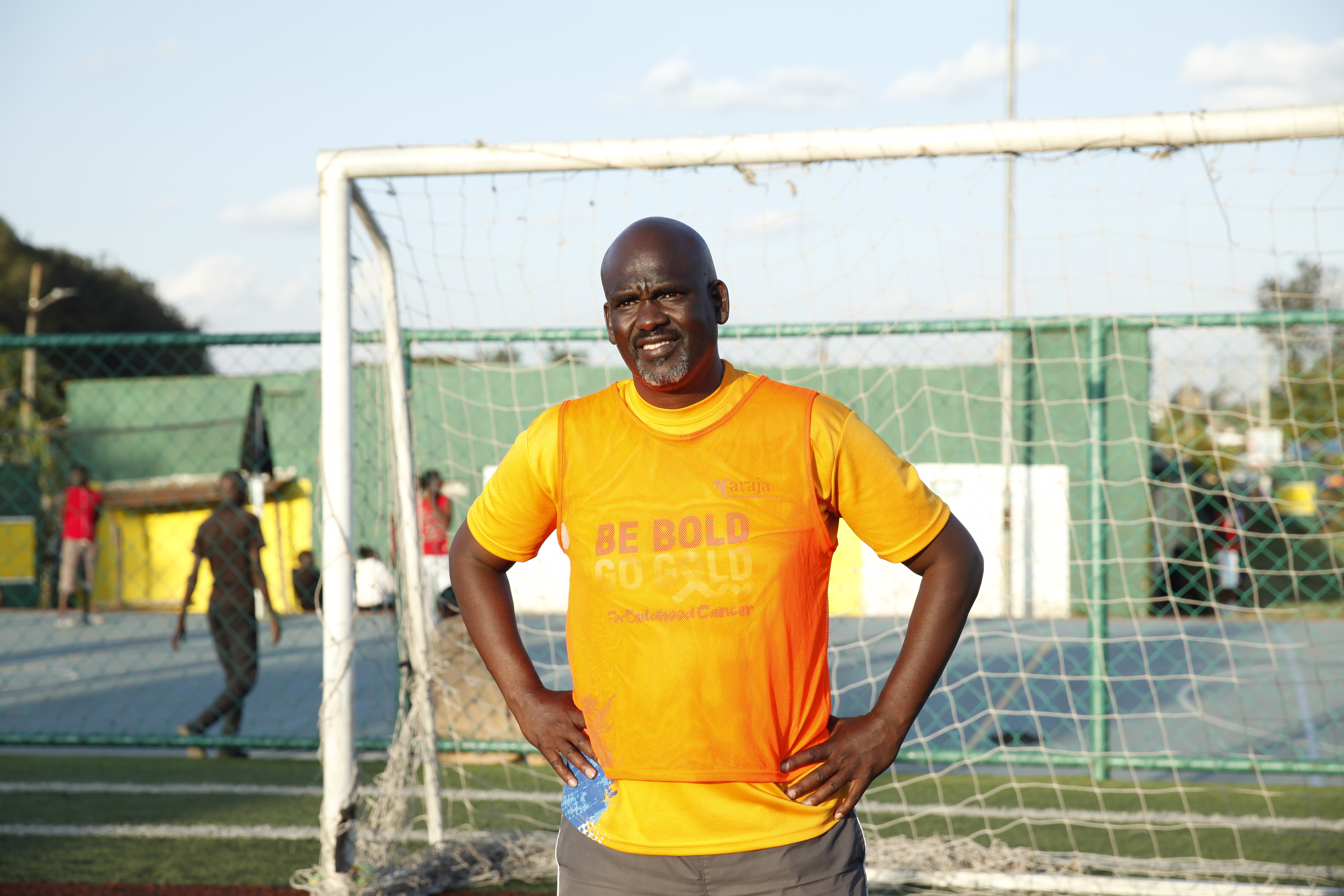
Kiarie Mwangi has spent decades running community football initiatives. He’s started football teams and leagues in maximum security prisons and to help his community heal after post-election violence in 2008. Today, he’s the president of the Kenya Walking Football Federation (KWFF) - now the only federation in the world with more women playing than men and among the first anywhere to bring in deaf and visually impaired players.
In this interview, Kiarie shares how sport can bring a community together, the social and health benefits of walking football, real inclusivity and his ambitious plans to grow the sport in Kenya and across Africa.
The interview has been condensed and lightly edited for grammar and clarity.
[ Background ]
I grew up around sports. I’m 54 years old and growing up in the 70s and 80s, it was eat, drink, sleep football! There was not a lot of variety back then, just the traditional sports. My father was a boxer and he went on to become a coach, team manager and administrator in the 80’s. Later he moved to cricket in 1989 and worked as a journalist for 30 years until his demise in 2019. My mom played netball and played for the bank she worked in for 34 years.
So, largely, my background has been sports. About 20 years ago, I got a chance to work for the South African firm, SuperSport doing live broadcasts across East Africa as they were expanding outside South Africa, and spent 10 years from 2007 to 2017 there. We did a lot of live broadcasts across many sports in East Africa. During this time I realized how there is a lot more to football than the 90 minutes!
In between, I had a chance to go to prisons and engage the prisoners there. Back then, a lot of athletes were getting incarcerated, so there were a lot of conversations around sports and crime. It’s hard for someone if you’re a top player who does something, goes inside and then gets lost to the community - you’re not in the lineup, you’re not in the squad, people forget about you.
I became interested in this and started going around to different correctional facilities and we introduced football inside. We formed a league at the maximum security facility in Kenya called Kamiti Maximum Security Prison. That was 2009. We started small, purely out of interest.
[ Introduction to walking football ]
In 2022, out of my regular visits to prison, a few former players who were a bit older came to me and told me that every program and activity is centered around the youth but prisons have people who are over 50, a generation of people who nobody is engaged with.
So, I did a bit of research and discovered that every year in the UN calendar, October 1st is International Day of Older Persons and it’s commemorated globally. Well, I confess, I hadn’t heard about it before! So, I got a few partners and a bit of funding and in October 2022, I did the commemoration inside Kamiti Maximum Security Prison - and I did walking football.
I didn’t know much about walking football then, I hardly knew the rules! All I knew was it’s a sport for older people. After the event, I uploaded a bunch of things to my blog, my social media, personal accounts and voila! Someone called me and told me; “what you were doing is called walking football, and there is a global federation that runs it”.
"every program and activity is centered around the youth but prisons have people who are over 50, a generation of people who nobody is engaged with"
[ Starting the Kenya Walking Football Federation ]
I was just doing it, I can’t say ‘for fun’ but because I’d been told that I’d been coming to the prisons to do youth stuff - youth mentorship, youth football, etc but nothing for older people! Basically, I can say it was a coincidence. It was nothing intentional, nothing planned but because of the things I shared on the blog and my social media, it was picked up by a couple of other people who said, ‘hey, we’ve also heard about this!’.
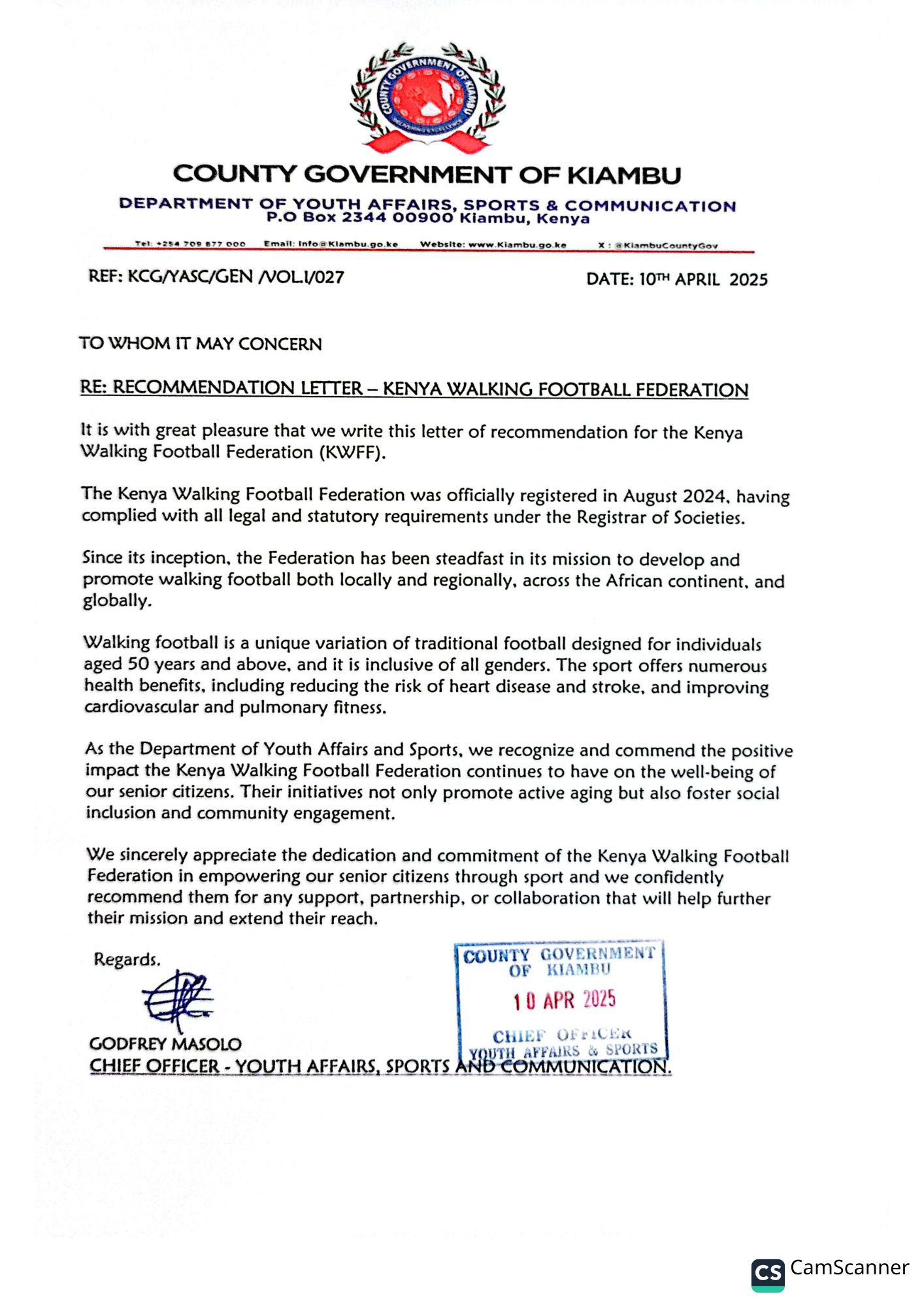
Long story short, I got a call from the UK, from FIWFA, that’s the global federation managing walking football, they encouraged me to keep going. By 2024, the Kenya Walking Football Federation was officially registered in Kenya under the Ministry of Sports.
I discovered that Kenya was the 6th country in the space of walking football in Africa behind countries like Morocco, Nigeria, Rwanda and Egypt. I also quickly discovered that there was a World Cup - the first edition was in 2023, we had missed it but it was important to learn there was a competitive version of walking football.
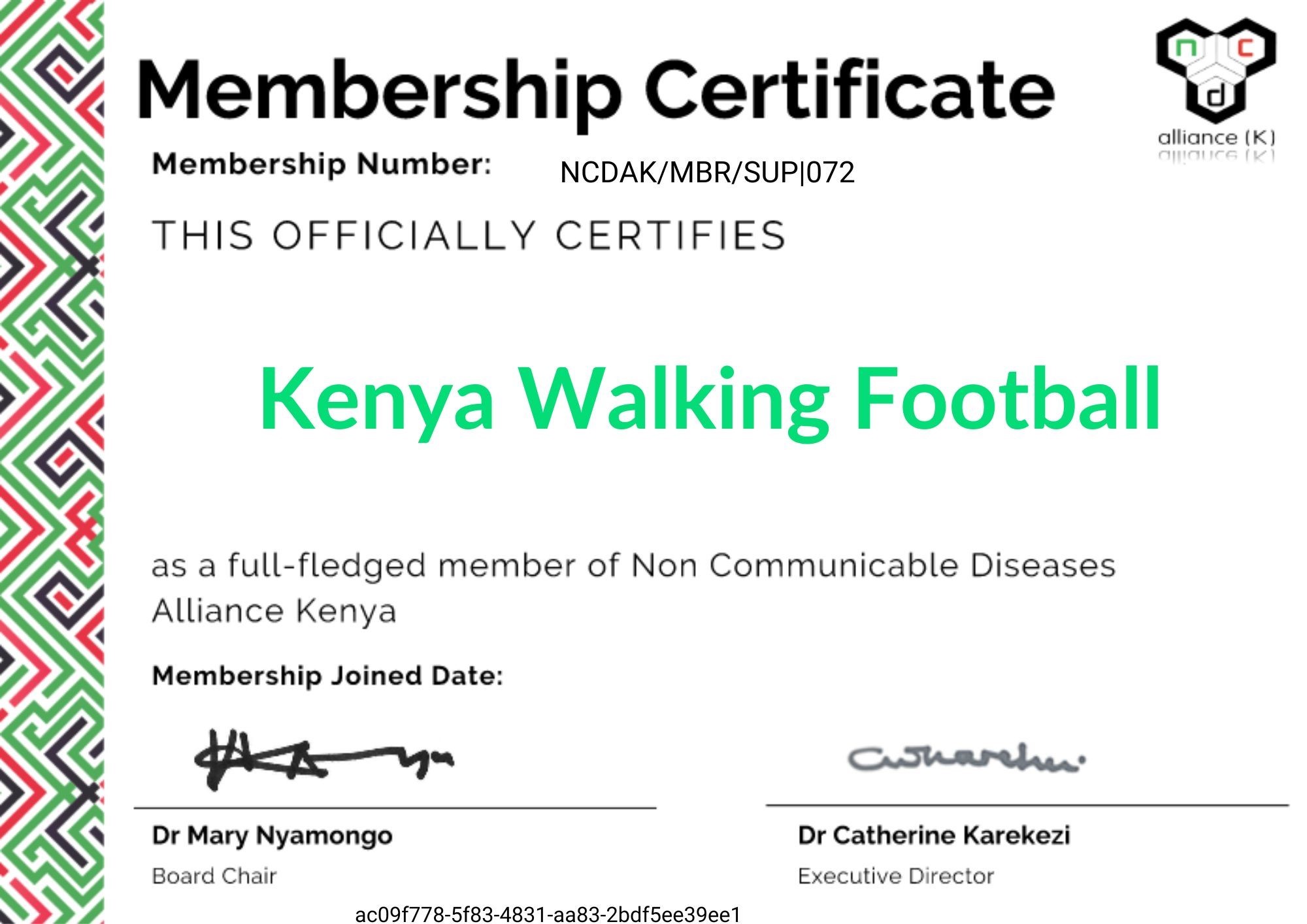
So, we have created basically two components for walking football in Kenya. One, recreational walking football - for health, social, fitness - as a place for people to come and have regular physical exercise. We went to the Ministry of Health, to a department called the Non-Communicable Diseases Alliance of Kenya (NCDA-K), it’s a space for older people with non-communicable diseases like diabetes, dementia, hypertension, arthritis, etc. I shared my idea and my concept and they affiliated with the Kenya Walking Football Federation in the hope that walking football can help them engage with the community.
Then, of course, every sport has a competitive angle, every sport is competition. Number two was the formal conversation with FIWFA. Having this affiliation was important and gave us some confidence. Within FIWFA, Mr. Ricky Weir, its ambassador to Africa, came to Nairobi in October 2024 and helped us get set up and the basic rules, coaching, refereeing and everything just to get the hang of it.
That’s how we got here. Our mission is very clear, to promote social networking amongst elderly citizens using regular physical exercise.
[ Can you explain walking football to someone who’s never seen it? ]
Walking football is a low-impact, non-contact sport. It’s largely played by people 50 and over, both genders - it can be played all female, all male or mixed.
The key rule is absolutely zero contact, which makes it safer from injury. Other rules include inter-alia; No kicking the ball above waist height, the goalkeeper cannot come out of the box (6 yards), No offsides, no direct free-kicks, rolling substitutions and it’s played 6v6 or 7v7 competitively.
Usually we play a 30 minute game. I like it to be continuous instead of two 15 minute halves because - and I’m saying this a bit tongue-in-cheek - the older you are, those 60s and 70s, their concentration span can be a bit lower, so it’s better to keep the game going!
Those are the basic rules of walking football, and as I said earlier, it's broadly categorized into recreational and competitive levels.
Recreational focuses on the health component. For example, in Kenya, we have organized diabetes walking football. We call the medical team, the experts, we call community people, we have a conversation about awareness, advocacy, we play, and then they ask questions. What we, as walking football, provide is a very informal environment of community engagement - you don’t have to be in a hospital setup or in a town hall reading a PowerPoint.
[ How many people are playing walking football in Kenya? ]
We have roughly 450 active participants in 7 counties across Kenya and we are growing organically. Still, we must admit, we are not at the place we would like to be. It’s a new sport, so in terms of partnerships, resource mobilization and engaging with corporates, it’s a bit slow on the uptake. It takes time for a new sport and this is a huge step for us.
And just to quickly point out some key milestones that have differentiated us. I can tell you with a smile, Kenya is the first country where we have more women than men playing walking football. Globally - and as a generalization - new sports are more often targeting men or in traditional sports, it’s often men’s football, then women’s football or men’s boxing, then women’s boxing. We are intentionally building a space that cuts across gender and women's engagement has been a huge part of our success. The ratio of players is now around 65 to 35, women to men. To me, that’s huge.
In July last year, we also started deaf walking football to appreciate and support the deaf or hard of hearing people within our community. We started with two people, former handball and athletics players. They started joining us every Saturday and it started growing, now they’re 23. And it’s been a key highlight because two things happened. One, we have a 10-minute sign language class before we play - that’s a powerful tool for inclusivity. Number two, we mix the teams. To receive a pass, you have to make a hand signal, you can’t just shout at someone for the ball! It really builds a lot of the kind of relationships we would like to have in a society.
Recently in December, Ricky Weir was here in Kenya again and we started walking football for the visually impaired, which was another big milestone.
We’re really proud to say that walking football is played in 124 countries globally and, I think I can brag here, Kenya is first globally in the topic of sports inclusivity.
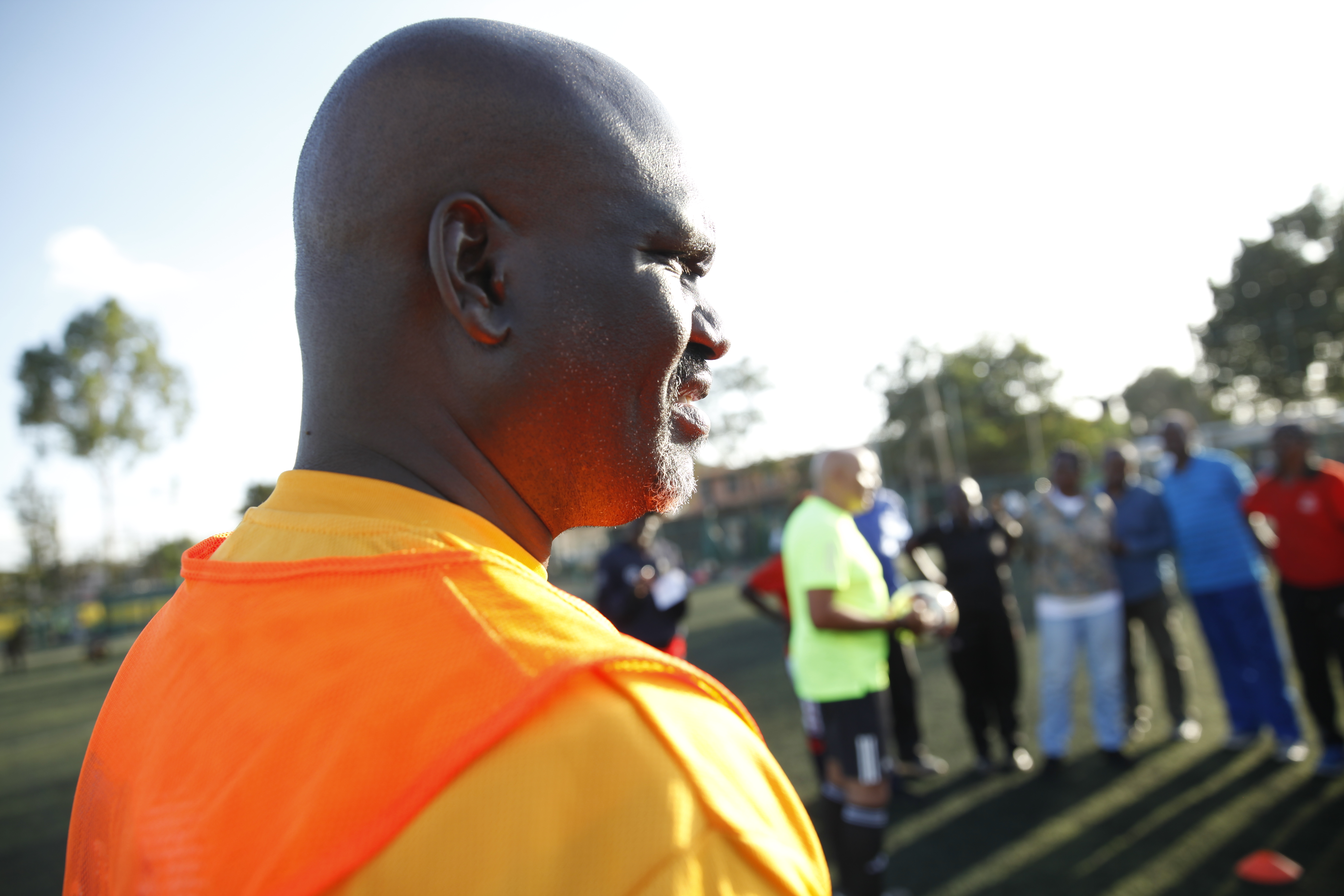
"I can tell you with a smile, Kenya is the first country where we have more women than men playing walking football"
[ Looking at how walking football has grown in other countries, it seems common that the core of the early players were ‘former footballers’ who maybe haven’t played for 20+ years - do you see the same in Kenya, or are there also people playing walking football who haven’t played football? ]
So, usually, the first conversation starts with former football players. I mean, it’s a default setting. Imagine if me and you played together 20 years ago, we’ve moved on in our lives, things have slowed down and we connect now at 60 years old, it’s a nostalgic feeling. That’s a big push in walking football. We’ve connected a lot of former football players who used to play with - and against - each other competitively at top levels, now meeting in their 60s. That’s really cool.
But it’s also very important, and we are intentional about driving walking football to people from other sporting disciplines. The name might be walking football but it’s not necessarily for footballers. For example, our treasurer is a “young girl” of 75 years, she’s a netball legend for Kenya. She played netball at the highest level in Kenya and Africa. She has a team, they call themselves the ‘Golden Oldies’ and they all played netball in the ‘70s and 80’s. Now they’re in their 60s & 70s and playing walking football.
We really want to debunk the idea or feeling that walking football is just for former footballers. It cuts across.
We also have people, regular community members. Maybe you stay a couple blocks away from where we play and train. You pass our field every Saturday and see us. Even if you’re not a footballer or a sporty guy, you can join us and our community and become a walking football player.
And finally, we have a category called ‘spectators’ - people who are not 50 yet. We want to have a succession plan. We need to spike interest in these people too. Like, ‘hey, you’re 48? Come join us. In a couple of years, you’ll play here anyway, so just start joining us’. And quickly, I can add that these people who are in their 40s, they make us work a bit harder and sweat a bit more!
We have lots of different types of people all playing walking football.
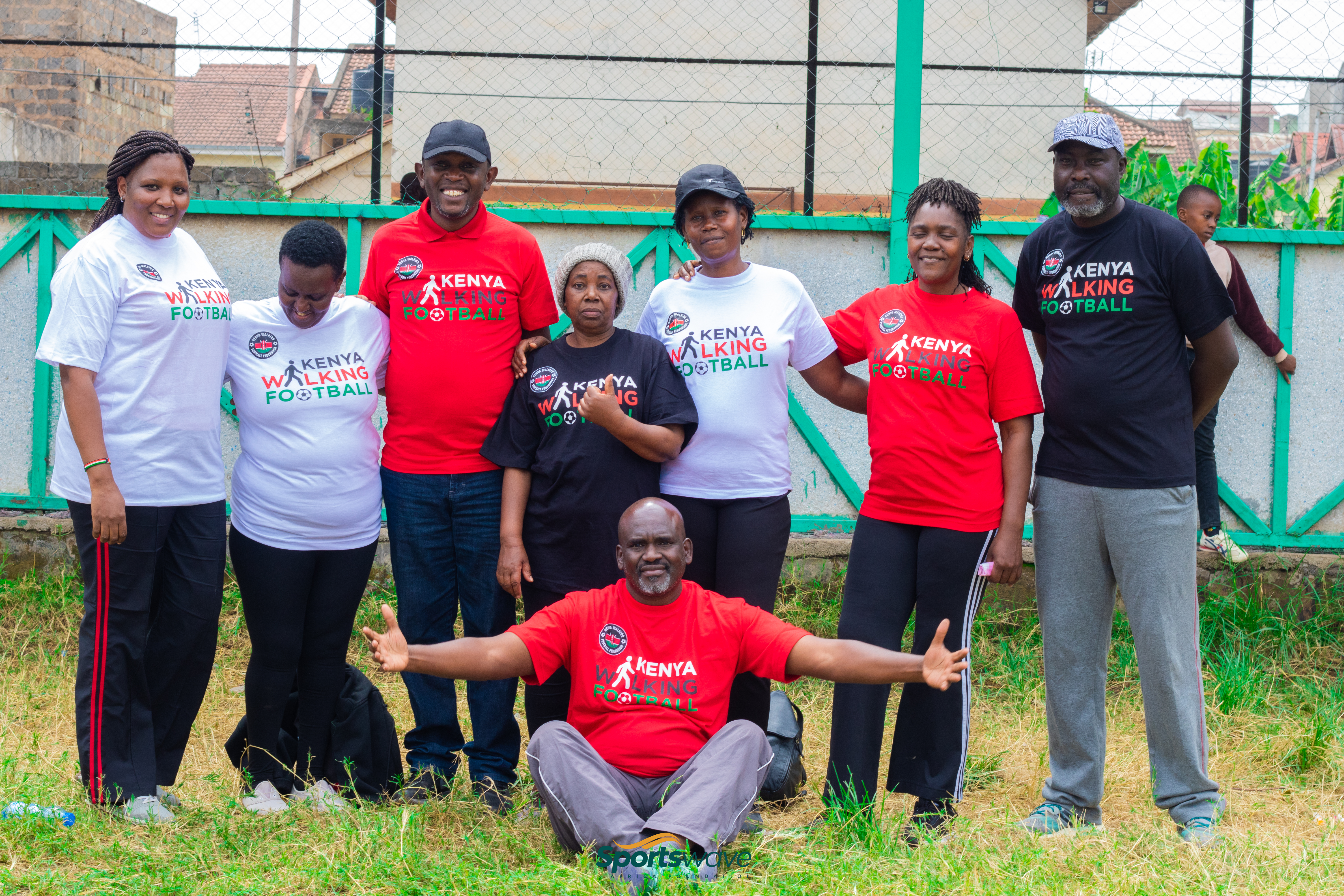
"We really want to debunk the idea or feeling that walking football is just for former footballers"
[ On the competitive side, is there a league? Do you plan to set up a national team for competitions like the World Cup? ]
Last year in November, we had a Kenya Open Walking Football Championship. The goal was getting more eyeballs on walking football, popularizing the sport and getting the conversation out there. We had teams from different counties, 300 kilometers away, converging on a central place - Nairobi. This year, we want to do the same - but remember, it’s a new sport. You know, young people are more agile, they are quicker to pick up new things. Older people can be a bit reserved and skeptical, so we need to take baby steps.
There are even some plans for walking football to be considered as an Olympic sport, God willing! I’ve been in conversations for the last months about forming an African Walking Football Championship. It’s been spearheaded by Morocco - Morocco is like the big brother of sports in Africa - it would be a huge win for the sport and its visibility in Africa.
Walking football in Kenya is still not at the league level. We’re still in a growth phase where we don’t want to separate into leagues or national teams or trials yet. Eventually, we want to grow the sport locally as a club based sport where you can join a walking football club.
These, along with partnership and collaboration because you need a few partners and a few people to hold your hand a bit to grow, are our main focus areas. And we are looking forward to the walking football World Cup next year in France too!
[ Why is sport so good as a platform for social and community topics? ]
Number one and very basic. Sports cuts across age, gender, religion, and social status. That broadly encompasses sports. Quick example, let’s say the CEO of a firm and the guy at the very lowest end both support Arsenal. The emotion when supporting a team, it’s the same. When they wear the shirt, it’s the same. For me, sports are apolitical and a universal language.
Two, having done a lot of sports within correctional facilities, I’ve seen how sports can be a tool for rehabilitation and integration back to society. During the COVID period, I attempted to form a team of ex-offenders, using football as a platform for promoting peace. It was amazing.
And number three is retirement. People say ‘retirement’, I call it ‘redirection’ because you cannot retire from what you like! For me, I like sports. Besides walking football, I’m into gateball - another sport which is popular in Japan, and I’ve made a lot of friends in Japan between 75 and 95 who are playing walking football now. So, why not? The number one killer of older persons is social isolation and loneliness. Just getting yourself to a field with other people can do a lot.
With walking football, we drive the experience on and off the field.
"I’ve seen how sports can be a tool for rehabilitation and integration back to society"
[ You also started another community league - the Wazee Pamoja League? ]
Yeah, I was part of the start-up of the Wazee Pamoja League - started after the post-election violence in 2007 and 2008. We formed the league within the Eastlands area of Nairobi, you know, the ‘ghetto’, the rough roads. It’s a league for older persons - not necessarily over 50 - but people who are not playing in the regular leagues.
It was formed purely for peace and cohesion, appreciating that sports are very apolitical and sports are a universal language.
[ You mentioned the World Cup in France next year, what other goals or milestones are you hoping to accomplish in the coming years? ]
In five years' time, we have several goals.
We would hope to have a league structure in Kenya. We’d also like to have a regional competition. Rwanda is already active - they went to the World Cup in England in 2023 and Uganda joined walking football in April this year. I envision a place where we can have an East African Championship on a rotating basis.
Next, in the spirit of AFCON, it would be amazing if we did also have the African Walking Football Championship. Let’s say 2028, we have the first one and 2030 the second one - that would really help spur a lot of growth.
And finally, I would like to have a deeper conversation about preventative healthcare. In Africa, we have a lot of curative health care programs - in five years, I envision a space where we can use walking football as a platform for things like diabetes advocacy and awareness. Appreciating that diabetes is 100% treatable, it’s been tested, it’s known and it requires two things - nutrition and regular exercise. Walking football can play a role.
[ How can people support you and your work? ]
Our website is www.kwff.co.ke, go see what we do. Our social media channels are all there, our Instagram, YouTube, Facebook, X, so that would be a first stop. Then we can start a conversation. You can also reach me on LinkedIn as well. It’s been a huge connector.
We want to push the visibility of walking football. Even with all the good intent, if you’re not seen, if you’re not visible enough, it becomes very hard. The number one next step for Kenya Walking Football Federation is engaging new membership. We will have more teams, more people and more categories coming.