Football is shifting. As players gain more control over their image and influence -mirroring the NBA’s player-power era - fashion has become one of the clearest expressions of their identity on and off the pitch.
Footballer Fits (FF) has become one of the most important platforms behind this shift. They are dedicated to helping athletes express themselves, share their stories and connect with fans on a human level. Their mission is simple: to change the game one outfit at a time.
In this interview, founder Jordan Clarke shares his experience growing Footballer Fits from his bedroom to collaborations with some of the game’s biggest stars and a global audience that reaches >25 million users monthly across their social platforms (!). He talks about taking risks, the passion that keeps him pushing the culture forward, and the human centered approach behind a brand that’s reshaping how we see footballers.
The interview has been condensed and lightly edited for grammar and clarity.

[ Background ]
When I left school, I did a two-year semi-pro football scholarship, which was run so unprofessionally, it was like a ‘mess around’ for two years. I sort of struggled adapting to adult life. I never really went on the traditional path of school, A-levels, university and I had to go work in retail, in a stock room. I think I was very much in a place where I always wanted to work for myself, I wasn’t quite sure on what, but I’d always been involved in creating social media pages and being creative in that aspect.
Then, when I was 20, still working the stock room, Footballer Fits came along. I was just trying to merge two passions of mine, I was doing stuff on social media anyway, and I wanted to have a football page and a fashion page and the opportunity arose to combine the two and it just sort of became Footballer Fits.
The last 5 years have been a whirlwind really, it doesn’t feel like 5 years - but at the same time, it feels like 20!
It was very much a case of leaving school, struggling with the ‘real life’ world of adulthood and then a passion project picked up, and I was able to go full-time with it. I’ve been very blessed in that aspect but yeah, very much a non-traditional route compared to what most people in the industry have done.
[ Where did your interest in fashion come from? ]
I think it was just COVID times, you know? We were all locked up, and the only thing you could spend your money on was online shopping! I had an interest in fashion before that but it wasn’t anything too serious, it was just wanting to look presentable and I wasn’t really spending any money on it until COVID and my interest just grew from there. Maybe, looking back, saving my money would have been the wiser option, but if it’s brought me to this path, then it was worthwhile.
I think everyone took up new interests during COVID, and I guess fashion was one of mine that I really took an interest in. I had no real prior background in it, or inspirations around me. I live in a small town in England, it’s not like London where you’ve got models everywhere and everyone dressing so well - down here, fashion wasn’t really big. My inspiration came from online, I suppose. Seeing American culture, how athletes are dressing over there and how footballers were starting to dress, really inspired me in that way.
[ Can you describe what you’re trying to do with Footballer Fits? ]
So, the first few years were very much about bridging the gap between football and fashion and being a platform that really supported players. Football and fashion was just starting to rise but there wasn’t really a platform dedicated to supporting footballers. The first probably one to four years was very much about driving football and fashion conversation, driving interest and being the platform that was supporting players even when they maybe weren’t in the best form on the pitch or getting some online abuse. We wanted to become the ‘home’ of conversations around football and fashion.
Now we’re trying to pivot into really humanizing athletes through our content. So, deeper storytelling that shows their personality more and creating content with them that shows their human side to connect people - especially youth - with the person behind the athlete. I want to produce more long-form content and get players to open up. Aside from the fun football fashion questions, can we get them to open up on what really drives them as a person, their creativity and that side of things? That’s what I’m really trying to focus on going forward.
I think football and fashion has grown so much now, there doesn’t need to be someone driving it in the same way anymore. Everyone - brands, clubs, leagues, the players themselves - is getting involved. We want to humanize athletes and allow them to write their own narratives through us.
[ How long did it take to go from a side project to full-time? ]
I launched in February 2020, but as I say, because it wasn't a business, and I was a young guy, it wasn’t a big ‘launch’ that I’d been working on for months or anything. I got some help on the name from a friend I was working with on a different project and just started posting about something that I liked.
After I started, I sort of faded away for a few months and then went back to it. By 2021, I got to a point where I could start working with brands. I also had some support with an investment that allowed me to leave my job at Argos and live off that money for a year. It was make or break, if I didn’t make it in a year, I’d be back at Argos, but it gave me time to really go for it for a year, that paid off and we kept building and scaling.
Now, we have a partnerships team that can focus on bringing partnerships in with the bigger brands, driving our revenue and that keeps the lights on basically.
So, I would say it was about a year of posting before the opportunity became apparent. It’s a hard one because you want to go fully at it, but I would never tell someone, ‘just quit your job and go for it’ because it’s a lot easier when you know money’s coming in the bank and you can drive your passion forward rather than panic that this has to make money instantly, in my case, the investment definitely helped.
"It was make or break, if I didn’t make it in a year, I’d be back at Argos"
[ What does a partnership with a brand/club/player mean? What kind of partnerships are possible? ]
New Balance was the first brand to take to FF, which, to work with a brand that big for your first ever client was amazing. One of the first few things we did with them was digital covers. We would produce, style and roll out a digital cover with an athlete - for example, we did Harvey Elliott, Timothy Weah, we did something with Eze when he was at Crystal Palace.
So, we work with the athlete, make their products look really cool, photograph, video and interview and then roll it out across our social channels. Basically, the goal was to activate their athletes and get the brands and athletes in front of young people in cool ways that hit cultural tones, etc.
That was our main ‘bread and butter’ and we were quite reliant on digital covers for a while, but I wanted to branch out. We’ve done different partnerships, like with Harvey Nichols, where we do long-form ‘shopping battles’, where two players go into their store and pick out five outfits and we’ll have a stylist judging who wins. So, we’re trying to branch out with more creative concepts like that.
Of course, you have to come up with a concept, pitch it, and if it’s successful, then you have to bring the whole production together and roll it out. It can be a long process, sometimes it can take months and months to pull off but it’s part and parcel of the challenge. Once something’s done - and I think Shopping Sessions has had over 200,000 views on YouTube across the three episodes and millions more across social - it can be really, really beneficial and rewarding.
I’ve got 3 people in partnerships now because it’s a tiring process that probably isn’t for me - so I leave it to the experts!
[ With these initial digital covers, how did the process work? ]
In the early days, the budgets were tiny - and I was a one-person team at the time. The first few, I would get like £5,000 and spend the majority of that on the production to make it really cool. I was trying to invest heavily to show what we could do down the line. I’d get like a £600 Airbnb for a couple of hours and hire the photographers and everything, I was probably making like 1,000 from a 5 grand deal!
But basically, I went to an Airbnb, or sometimes to the players’ houses, and worked with them for a couple of hours. Afterwards, show all the photos to the players and get an idea of what the brand liked. Then, we’d pull it all together, get approvals and then it would go out. Most often, it was a collaboration across the brand, FF and the athletes.
[ How big is the Footballer Fits team now? ]
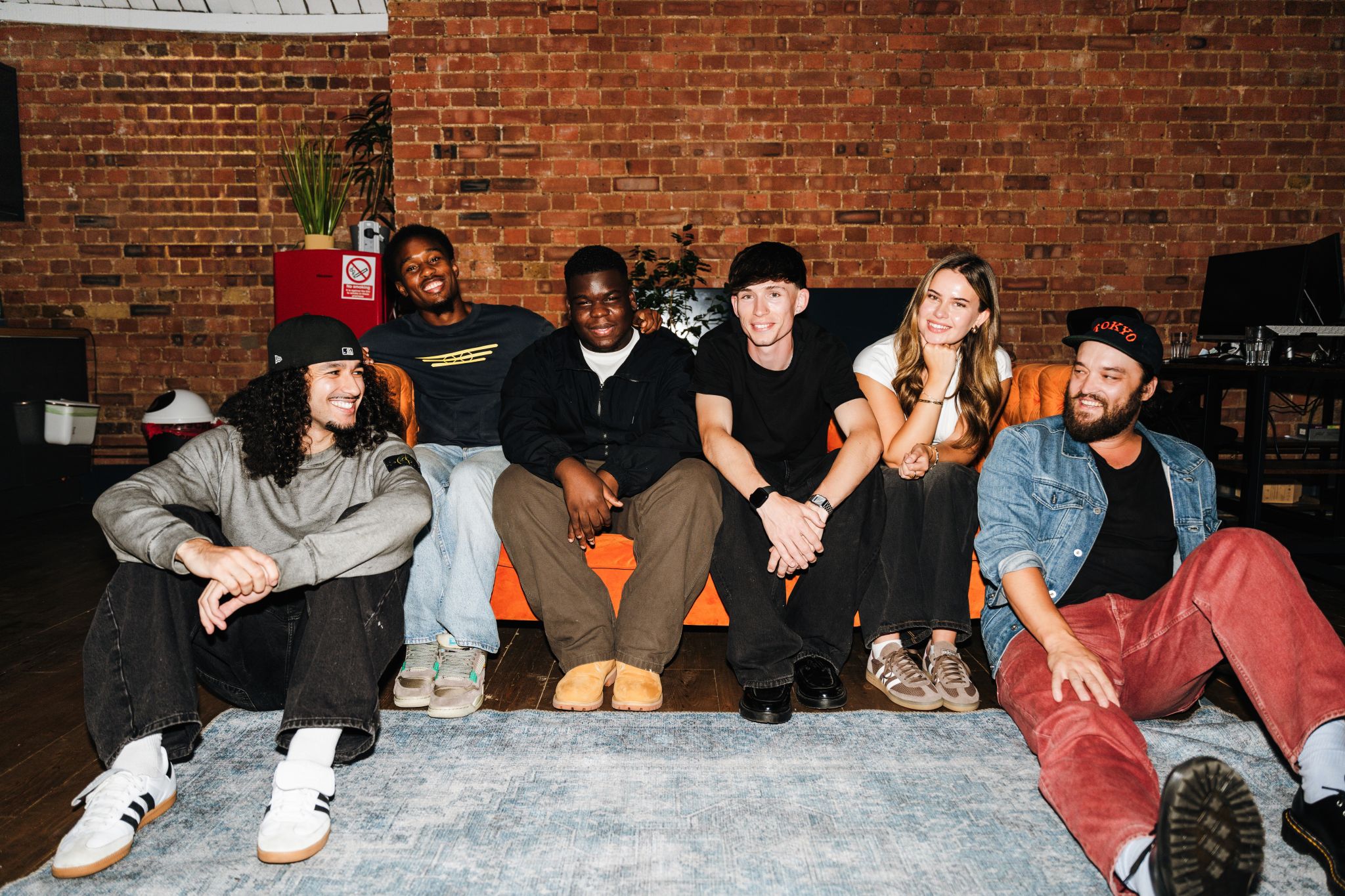
We are a six-person team now in the ‘core group’ and hopefully we'll keep growing. We also have several people who aren’t with us full-time, but I’d still include them as part of our team - for example, we have a stylist that we use nearly every single shoot and photographers and videographers that we use all the time and I’m very grateful for all the great work they do.
[ It seems more and more footballers - and athletes in general - are at minimum more ‘fashion conscious’ if not more directly involved with their own brands, etc - why has this become so common? ]
Yeah, I think, obviously, with the rise of social media, it's given people a platform to, one, see what other people are doing and be inspired, but two, a platform for them to channel their interests as well. I think with the rise of socials, you are able to see what other people across the pond are doing, so whether it be footballers being inspired by the NBA, or the NBA being inspired by another sport, I think that's very much played a part.
I think, looking back to the ‘shut up and dribble’ thing with LeBron James, there’s very much been an attitude amongst athletes where they don’t want to be boxed in as just footballers, or just basketball players anymore. They want to be more, they want to express themselves and I think that’s played a big part.
I also think the rise of socials and Gen Z and younger people growing up with socials, there's actually been more demand to see an athlete’s personality and to grow their personal brands. It used to be players who were solely focused on football. You look at Ronaldo or Messi, they never had too much of an interest in anything aside from football but I think the times are changing now where it’s very much a case of, if you want to grow your personal brand, you need to get involved in culture, because that’s what young people are interested in.
Florentino Perez, the Real Madrid president, said something about how football fans aren’t watching 90 minute games anymore, they’re just watching clips and highlights. I think that’s true in the way football has gone and I definitely believe that many younger fans are more loyal to players than they are to clubs these days.
So, athletes are trying to find ways to keep themselves interesting in order to grow their personal brands, and social media provides this outlet to be creative, to show their passions and also to be influenced or inspired by others. Something I’ve noticed for 4 or 5 years now, whatever is happening in the NBA usually follows in football a year or two later with regards to fashion and content.
"if you want to grow your personal brand, you need to get involved in culture, because that’s what young people are interested in"
[ Do you think the clubs, or the FA, or the Premier League, for example, are supportive of this increased interest in fashion and style? ]
I think when it suits them, yeah. When clubs want to sell a kit, or they want to sell a new collaboration range they've done, they want the players to be super fashionable. But when the club is losing or the player isn’t playing well and a player wants to go and do their own stuff, there can be some resistance.
So, it can be quite an interesting dynamic but I think football is definitely warm to it - much more so than when I first started this 5 years ago. The scene is just a different level now and a lot more supportive.
I would say that the big leagues like the Premier League could be doing so much more, but I also understand that for a company that size and with the shareholders they have, it probably scares them to think about going into shouting about fashion and things like that. There’s still some of that traditional mindset and attitude about not getting involved with this but it’s changing.
[ Is there a connection between off-pitch fashion and on-pitch fashion? ]
Yeah, I think there's definitely a connection. Obviously, players are quite limited in what they can wear on the pitch with the club kits and the rules that they have to follow with shin pads and all that.
For me, things like boots are definitely a part of a player’s personality. I think we’re seeing brands tap into signature boots - which again, is another thing that comes from the NBA with their signature sneakers. We’re seeing more players have involvement and be able to create their own shoes and boots. I think more brands could tap into that as well, some brands seem really tight with giving signature shoes, but for me, the majority of boots could be player designed.
You’re definitely seeing style on the pitch with things like headbands, wrist tape, how they cut their socks, the boots, now some players are wearing their shorts really low. So, these are all aspects of players diving into on-pitch style and trying to look how they like and feel comfortable.
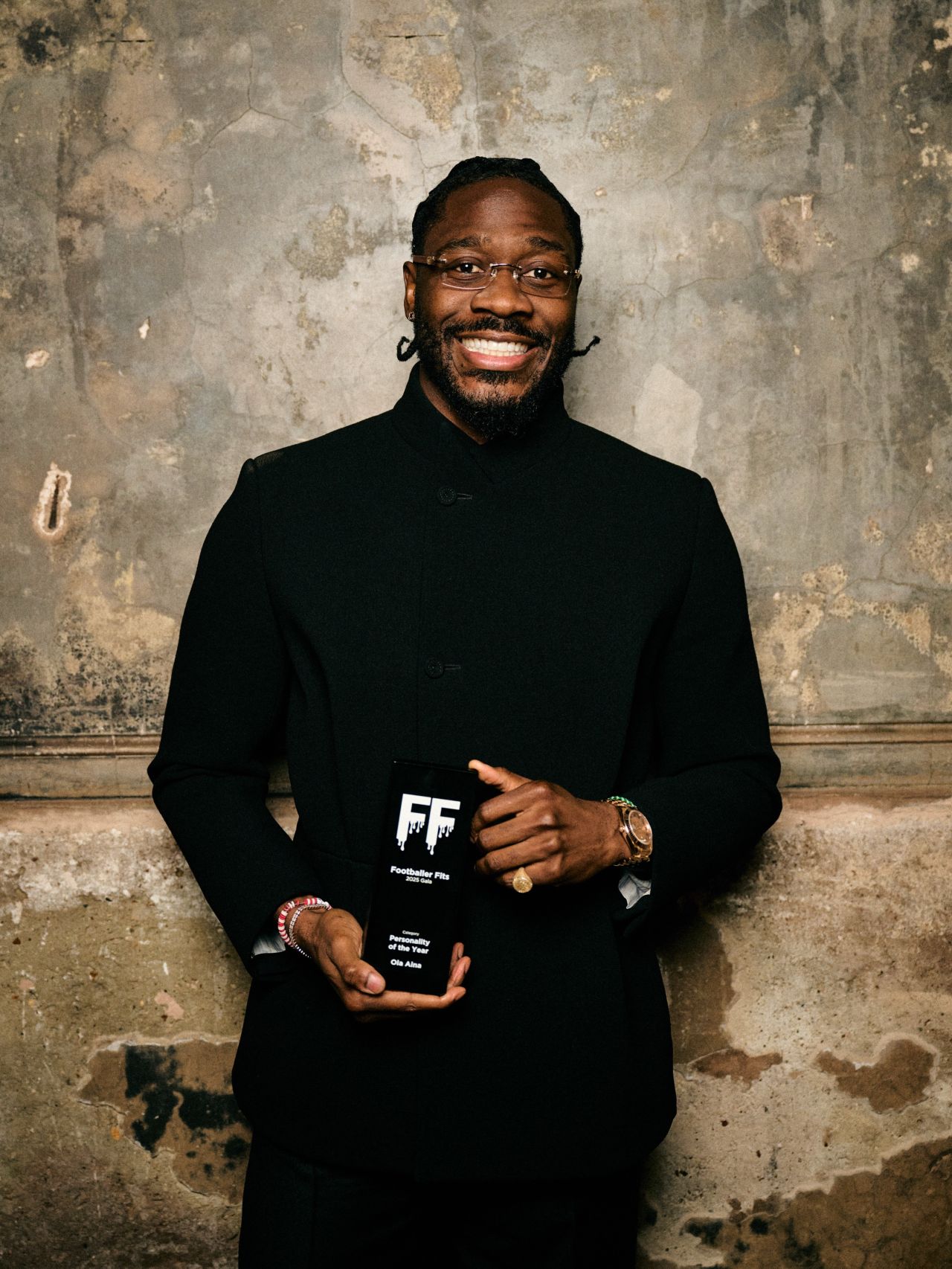
It’s creating talking points as well. I know Ola Aina from Nottingham Forest and Calvin Bassey from Fulham have both worn their shorts really low and it was talked about loads across social media, some people laughing about it and some people asking why. So, you’re seeing player personality on the pitch as well.
[ It seems like on-pitch trends can come really fast, I think socks are an easy example - just 10 or so years ago, it was ‘in’ to have really high socks but now you either have them around your ankles or with holes in them. How do these trends develop and catch on? ]
It’s definitely the influence of footballers. I've seen it firsthand and even get messages from players asking what another player is wearing - it might just be a plain t-shirt, but they just want to wear the same things that footballers wear. On the pitch, I think footballers are inspiring each other, and the fans want to look, feel and play like them.
In terms of the socks, I know a lot of players will say it's about the calves and wanting their legs to breathe a bit, but it’s definitely a fashion statement as well. I think Grealish is the one who really made it the biggest, sort of talking point, and then other players followed suit. It’s part of their identity, they want to play freely - without the sock compressing their calf!
But, in terms of how trends catch on, I think it's just footballers being influential in what they're doing on and off the pitch and people want to follow. When I was growing up, it was Ronaldo in the AIG Man United kit, he had wrist tape on, he had hair gel in, and he pulled his socks up with the white socks underneath - I’d never seen that before - and now, to this day, when I play football on a Saturday or Sunday, people are still inspired by how Ronaldo was doing it. So, these sorts of things have always been like this. If a player's performing on the pitch and they look cool while they're doing it, people want to do the same thing, it's just how the world is, how society is, I suppose.
So, the majority of decisions players are making are probably just for comfort but I think more players are expressing themselves as individuals on the pitch as well. They want to have some sort of signature traits at their games that can be spoken about or that they can commercialize. Look at Cole Palmer with his celebration - I know that’s not really a ‘style’ choice - he’s trademarking things like that and getting brand deals through that.
Players are finding new angles to be individuals and have a unique selling point - and style on the pitch can definitely help with that.
"If a player's performing on the pitch and they look cool while they're doing it, people want to do the same thing"
[ You also cover fashion and style in women's football as well - what are some of the differences between men’s and women’s football? ]
I might be completely wrong here, but I think the majority of the difference is, while there’s definitely a growing rivalry and toxicity in the women’s game, it’s a much more welcome sport. Everyone’s welcome and there are more people encouraging each other. They’ve had to fight through so much to get the game seen, but in terms of the self-expression element, it’s perhaps more encouraged or even celebrated, whereas in the men’s game, it’s been on an arc where it was hated at first and is just now gaining more acceptance.
I’d say we were probably late to the women’s game. I always wanted to do it sooner, but was overthinking how we present it, whether we should incorporate it all together or branch off and give it a dedicated focus - which we ended up doing.
And now you're seeing such a rise of self-expression in the women's game, from Mary Fowler becoming the first pro footballer to walk at Paris Fashion Week or Lauren James with the way she’s growing her personal brand or Georgia Stanway, who’s a tattoo artist on the side and has an account dedicated to that. Obviously, the success on the pitch as well, with the Lionesses winning back-to-back Euros, has been massive in England.
[ What are your goals for FF’s future? ]
Yeah, I think just scaling, really. I think some of the best work is always done with a small, dedicated team and I don't want this big corporate structure where you have to go through 15 people to get a decision made, but at the same time, having more hands on deck to be able to go and do more creative stuff would be great.
Working with the biggest brands in the world on bigger partnerships and campaigns that really change the game is a big goal of mine. I want to be able to produce adverts with athletes that are on TV and I want to work with players and help them with their image.
But to answer as directly as possible, I really want to scale as big as we can and make as much impact on athletes’ and on our audience’s lives and create content that humanizes athletes and stands the test of time. I’d love for FF to be an outlet where athletes can always be themselves, open up, and we can create some really personalized campaigns that change both football and people’s lives.