At its best, football is the ultimate connector, bridging people across backgrounds, circumstances and geographies like few other things can. But in a fragmented world - and an even more fragmented media landscape - this gravity makes football an ‘opportunity’. People and organizations of all kinds are increasingly hoping to use the power of football to further their own goals.
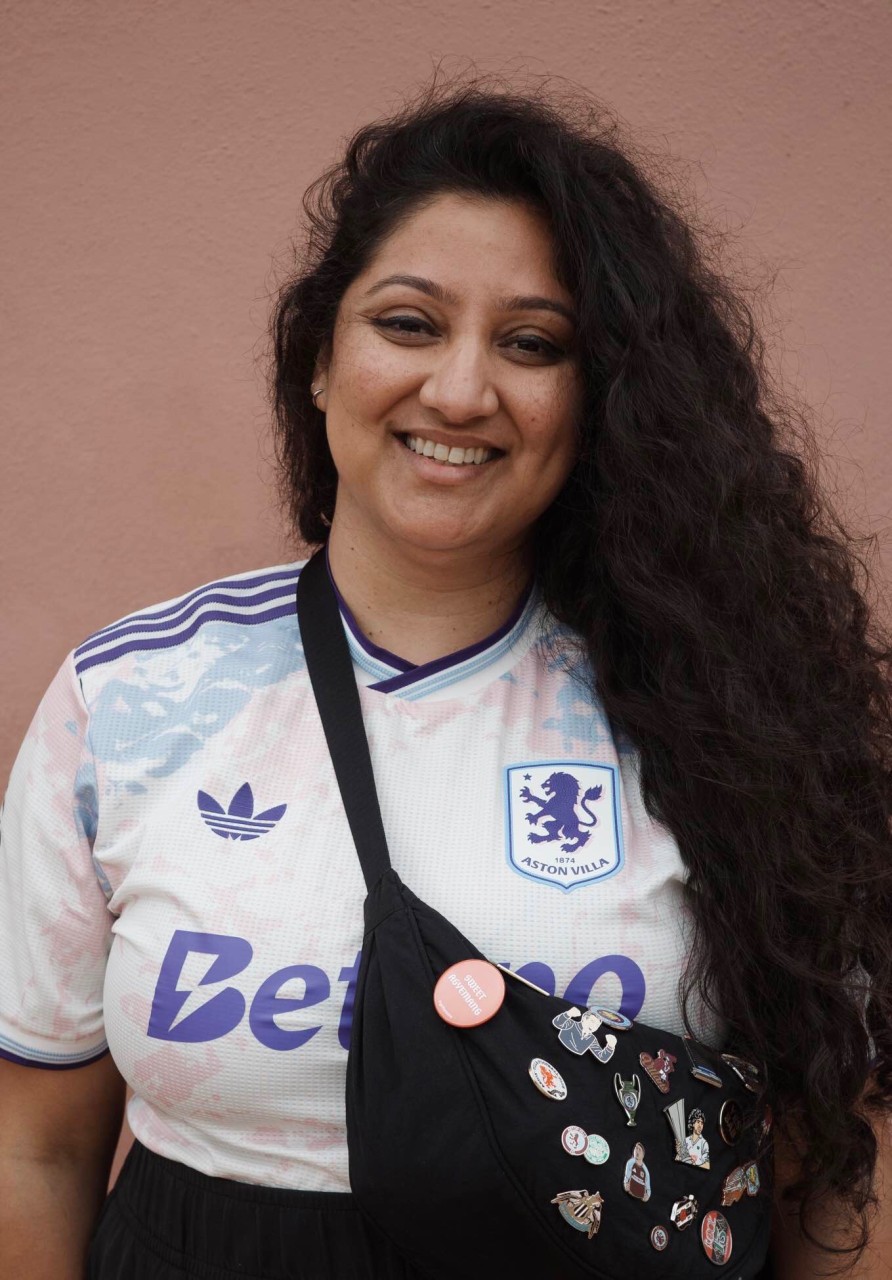
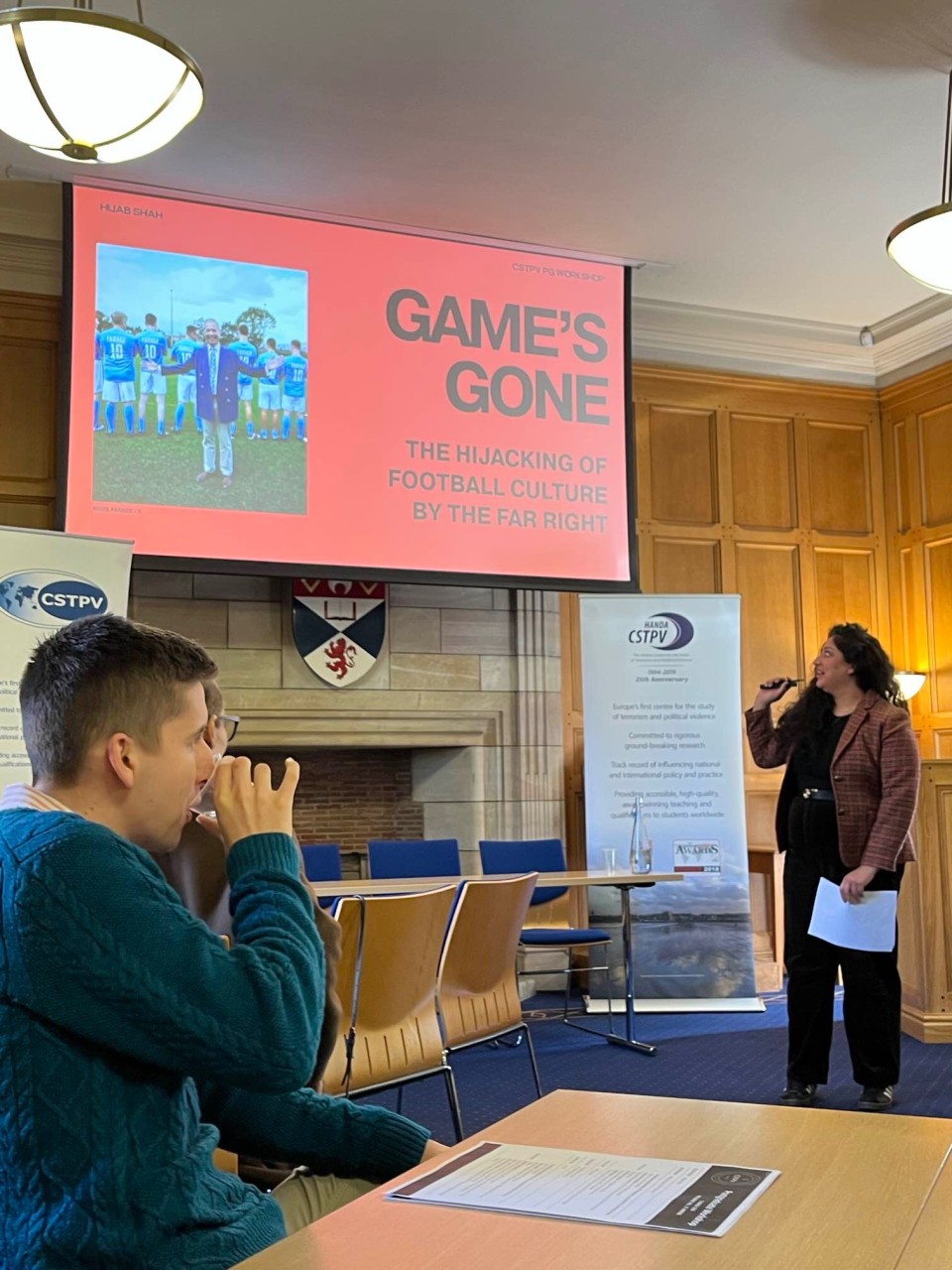
Hijab Shah is a PhD researcher at the University of St Andrews studying the role of sport in radicalization and counter-radicalization. Her research is hands on and she spends much of her time going to see football live while observing fans in and around stadiums.
In this interview, Hijab talks about her career switch, her research and why it should be accessible, and how football and football fandom intersects with politics, race relations and radicalization.
The interview has been condensed and lightly edited for grammar and clarity.
[ Background ]
I always wanted to be a sports journalist. I went to university in the US with that dream in mind, but knowing that I'd have to probably take a bit of a roundabout approach to it, because my university didn't have a journalism program. So I studied international relations and I tried to take as many journalism classes as I could, and joined the student newspaper as part of their sports writing team.
Ultimately, though, by the time I was about to graduate, we had the financial crisis and that, unfortunately, trickled down to newspapers, which is where I wanted to work. And all these newspapers locally, like the Washington Post, for example, were cutting down their junior staff, so it didn’t bode well for a graduate looking for jobs.
I ended up interning at a think tank and kind of inadvertently got sucked into the world of defense and security. I mean, if you’re Pakistani, and you speak Pashto, and you were in Washington D.C. in the 2000s, it kind of pigeonholed you into a specific space. So, I ended up in this world and worked in think tanks and international organizations.
[ How did you end up doing a PhD and focusing more on these sports related topics? ]
After about 10 odd years of my defense and security career, I realized that, just because you’re good at something, it doesn’t mean that’s what you’re meant to do. I had been applying for PhD programs and came up with this idea of looking at how sports can play a role in radicalization and counter-radicalization. I pitched that to a couple of professors to get a sanity check to see if they thought it was a worthwhile PhD pursuit. Thankfully, they were all interested and curious about it, and maybe thought, “Well, it’s a little bit different, but go ahead and pursue it.”
My original PhD proposal was going to be a three part series looking at football in Europe, cricket in the Subcontinent (India and Pakistan mostly), and then how rugby has played a positive role post-conflict in South Africa and Ireland. But, I eventually realized, these are 3 different PhDs, let me just stick to one – and football it was.
Since then, I’ve narrowed the PhD down even more: the case study that I'm going with is the 2025-26 season with Aston Villa. There have been a lot of ups and downs that are interesting for my research, and also the political backdrop with the elections going on and a couple other things like the Maccabi Tel-Aviv fan ban and so on.
So that’s how I ended up where I am now and I couldn’t be happier! I think I’m in the right place, hopefully doing the right thing.
[ Was there an ‘inspiration moment’ or more of a combination of things that led you to this topic? ]
Okay, so it's a great story.
I was having a really difficult time in the last job that I was in, and a good uni friend of mine said, you know what, just come hang out in London with me and the family and we’ll cheer you up. When we were students, we both had season tickets to our university’s basketball team, so we always had sports - especially basketball - in common.
Anyway, when I was over at their place, we watched The Last Dance documentary, which I had somehow missed the boat on during COVID. On the sofa watching The Last Dance, I was reminded that I really miss following sports, I miss how much it impacts so many things culturally. I wished there was a way for me to ‘marry’ the thing that I love (sport) and the thing that I’m good at (research around security).
Then I remembered 10 years prior, when I had been in my master’s program, I had read about the Irish Republican Army recruiting from GAA (Gaelic Athletic Association) teams by leveraging a lot of the things we associate with sport like identity, togetherness, and camaraderie. I thought that's so interesting and understudied - and it links the two things that I’m really curious about. I’ll always remember that moment watching The Last Dance on my friend’s couch, when the light bulb just went off.
"I thought that's so interesting and understudied - and it links the two things that I’m really curious about"
[ Can you describe your research in more detail? What does the day-to-day of a PhD researcher and actually conducting your research look like? ]
I will say that every university and PhD researcher is different and everyone's approach is different, so I can only speak to mine.
Essentially, you apply with an idea, with a proposal, and you find a professor that you can ‘apprentice’ with, someone who thinks your topic is worthwhile. The idea of a PhD was always that you are an apprentice to a scholar. That person becomes your mentor and PhD supervisor - and my PhD supervisor is the best person on the planet. Not everybody has a great relationship with their supervisors, but I lucked out.
You spend your first year learning about research methods, designing your research, reading a lot, and thinking about how you want to narrow down your topic. In my case, I haven’t started writing yet, as I’ve been doing a lot of data collection. My research design leans on ethnographic research: observing fan behaviours in what you would consider a football fan’s ‘natural environment’ - the stadium, in and around the stadium, and sports pubs and things like that).
In these environments, I’m trying to see and hear what people are talking about, what the chants are, what the signs are, and generally if there is anything happening that can be adjacent to or on the pathway to what we would think about as radicalization. Thankfully, I’ve been lucky enough not to be in a situation where there’s racist chanting or anything like that, but every so often, you do hear undertones, or conversations that are a bit loaded, and that’s the sort of data that informs my research.
Of course, in the stadium I can’t sit around with my notebook out, instead I send myself text messages on WhatsApp and those become my ‘prompts’ for a more detailed kind of notetaking and reflection when I’m back home after the match. This compilation of notes forms the basis of my ethnographic research. I think I’m the luckiest PhD in the world in that my research involves going to football matches!
And then I'm also talking to experts. For example, when I've gone on fieldwork to different international locations, I try to meet with people locally who are journalists, football fans, people who are involved in the sport in some way, to try to get their take on things and get a sense of what their football culture is like, and how it’s impacted by external factors like history, politics or the economic situation.
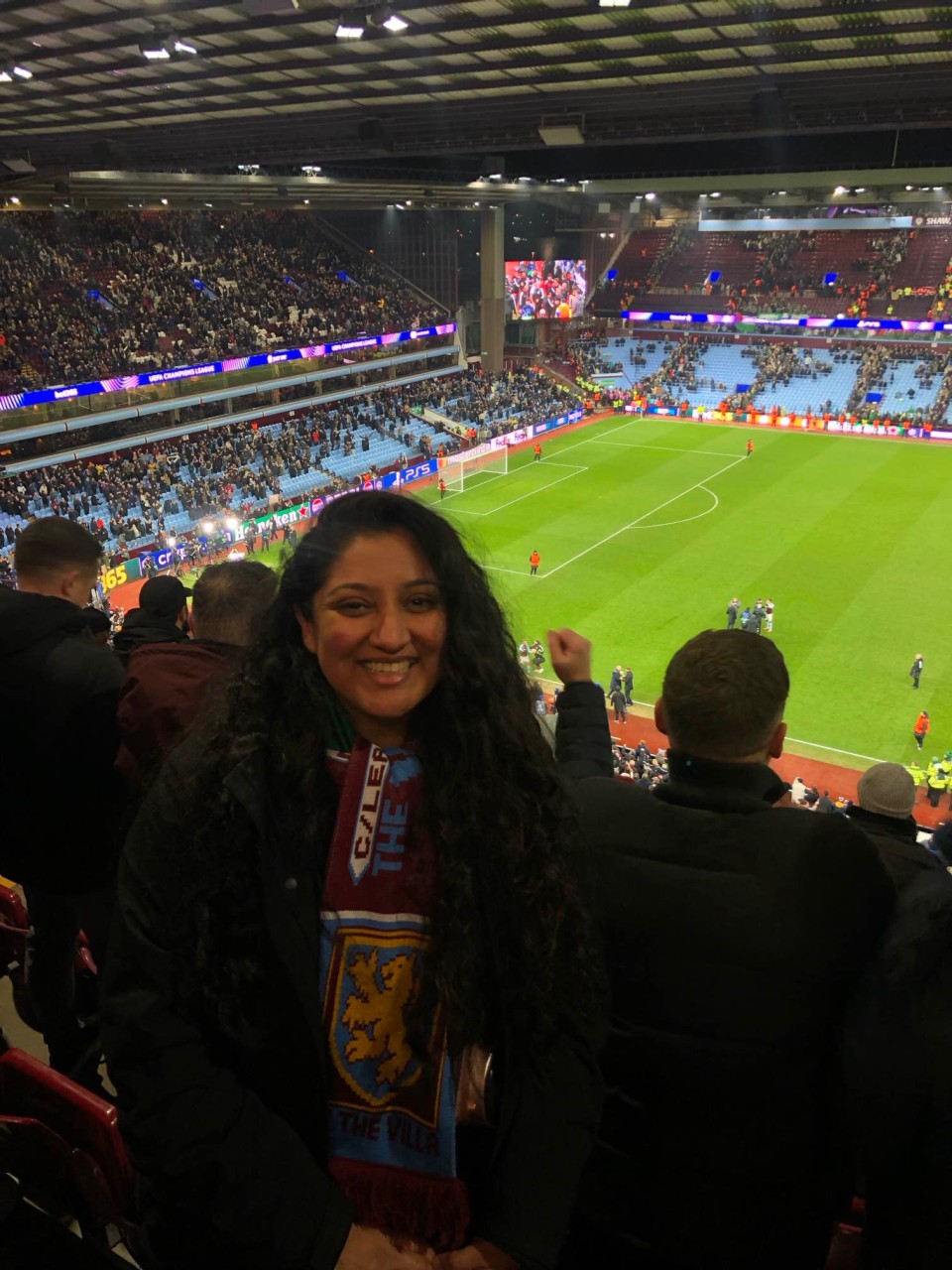
Now, I’m at the end of my second year, and I'm trying to convince myself that I’m done with data collection - which is hard! I’m on the cusp of the decision to stop collecting data and start analyzing it. My ‘final act’ of data collection might be going to Istanbul for the Europa League Final won by Aston Villa, which was, again, so much gold for my research.
The next step would be writing the dissertation. For us, the dissertation has to be 80,000 words.
I know that’s a long and angsty and drawn out process, but when you’re nurturing – and very passionate about – a topic for years, one of the hopes is that you’re not sick of it by the end. And I’m not sick of it yet!
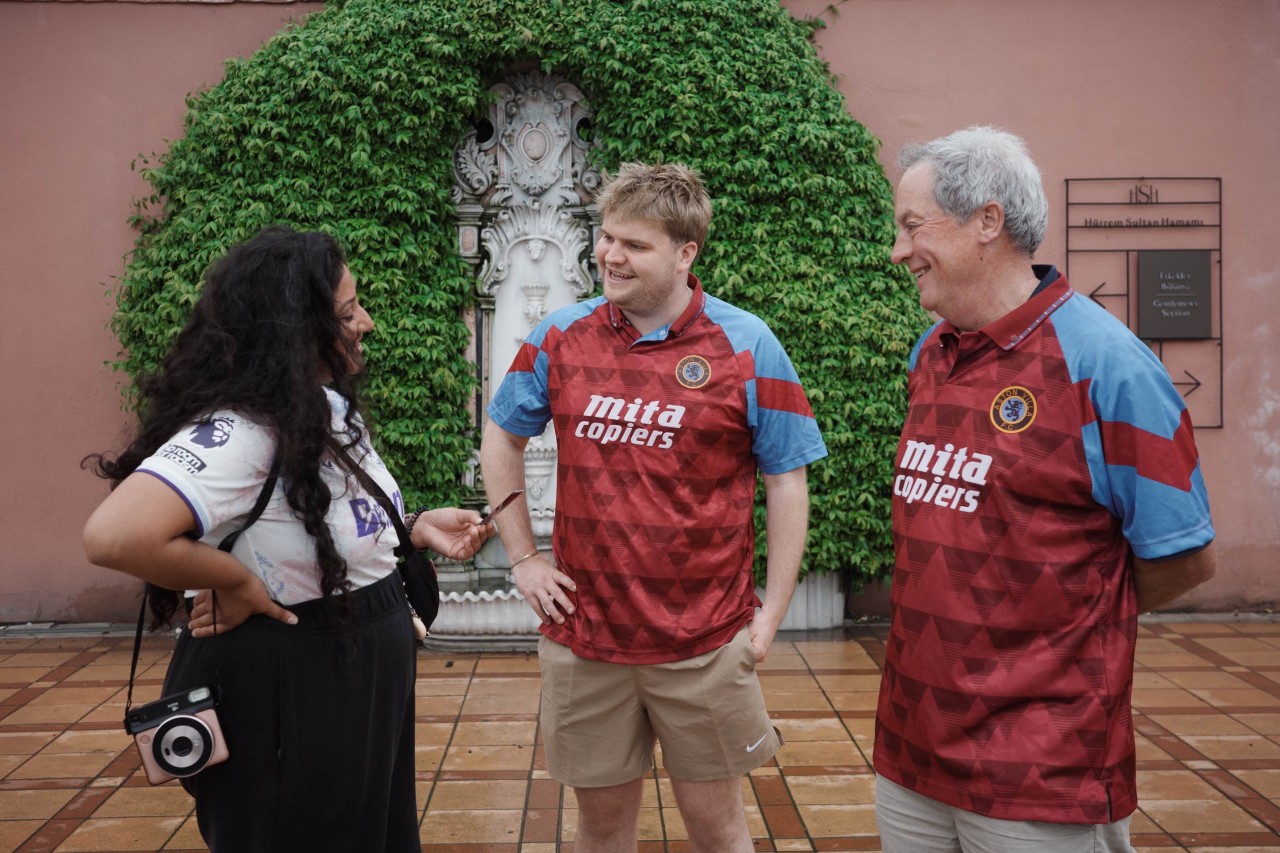
"My research design leans on ethnographic research: observing fan behaviours in what you would consider a football fan’s ‘natural environment’"
[ What are some examples of what radicalization - or counter-radicalization - actually look like in football/football adjacent spaces? ]
There are many examples but I’ll use the current political climate in the UK as a starting point. We’ve got a political party in Reform that aligns very closely with the far right, and they’ve been very, very successful in leveraging football fan culture for their benefit and gathering support for their political party. For example, Reform has put out merch, essentially a football shirt with ‘Farage’ on the back, and you saw a lot of those shirts appearing in far right rallies and marches. Or, at these rallies you can hear football chanting that’s being adapted into political messaging. At Villa, for example, there’s a chant for Tammy Abraham that goes, ‘Oh, TammyTammy, TammyTammyTammy-Tammy Abraham.’ at these rallies, you’ll very similarly hear ‘Oh, TommyTommy, TommyTommyTommy-Tommy Robinson’.
So, that’s one example, but there are a lot of other things that are culturally familiar to people in football that are replicated in far right spaces, and that political bridge can be crossed very easily because of that familiarity that's there.
Now, on the counter-radicalization side, there was a landmark study done by Stanford University in 2019 - I’d love to see if they’ve done any follow-up work- where they looked at the decline of Islamophobic hate crime in Liverpool after Mo Salah was signed by Liverpool. His performing so well has also led to greater awareness around Muslim culture and identity in football: you've seen the increasing awareness around things like Ramadan, where the Premier League has instituted a short break for players to break their fasts. Or you see things in social media spaces like ‘can’t spell Ramadan without Amad’ while talking about Amad Diallo at Manchester United, or Ramadan posts from Amadou Onana at Villa.
These are all references and context that have made it into mainstream social media culture that previously people wouldn’t have been aware of or treated with respect. On the flip side, you do still see, unfortunately, things like the Leeds United match against Manchester City where the break was maybe 30 seconds for players to break their fast, but there was booing from both sets of fans. So, lots of work still to be done, obviously.Not to call out Manchester City specifically in a negative way either – I’ve even prayed at their ground in a small prayer room with a group of people - so both things are happening at the same time.
At one point, I was attempting to do a social media analysis in and around big tournaments on both the men’s and women’s side, but I had to take it out of my research design because I’m not that savvy technologically and it can be tough to get access to the right data. There are a lot of interesting people who are doing work around this and I’m intending on digging into this as part of my literature review. Online football fandom is its own beast, but it feeds into in-person fandom and radicalization - and counter-radicalization - is there as well.
[ Maybe a bit cynical but there is a lot of ‘inclusion messaging’ from clubs/football organizations that seems perhaps more ‘box ticking’ than meaningful action. What can clubs/organizations/people in football do (apart from signing Mohamed Salah!) to actually make a positive impact in counter-radicalization? ]
I am also a bit skeptical about a lot of the EDI initiatives that are top-down. There’s a lot that’s good about it obviously, but I think it can come from a place of ‘this looks good right now’ or ‘this will bring us more money in some capacity’ whether it’s through sponsors or international fans or whatever. So, I can be cynical about this on a societal level.
In football, it can be a mixed bag. I think it’s very dependent club to club and how much they really invest in it. The Birmingham context is most familiar to me - Birmingham is one of the most ethnically diverse cities in the UK, they call it a ‘majority minority city’ where minoritised communities make up more than half the population. So, naturally that affects the demographic that attends football matches - even if it’s not representative of the actual demographics of the city, it’s still more diverse than other places.
When I go to the Villa - or even to the Blues matches incognito - I’m not the only brown person in the audience. In comparison, when I go to matches at Dundee FC, I’m often the only brown person in the whole stand. And that’s just the demographics. But I also think that the Birmingham clubs have made more of an effort to reach out to the community.
At Villa, for example, the Villa Foundation does a lot of good work in the community, especially in the area around Villa Park that is very diverse, predominantly with the South Asian diaspora community that lives around Aston.
A lot of issues can occur when you have a huge swath of people coming into a stadium that's set within a residential suburb. So there’s a lot of outreach from the Foundation for things like organizing a big iftar for members of the community to break their fast - which was actually my first time going to Villa Park!
Interestingly, this past Ramadan, Villa didn’t host a public iftar, and it was the first time since I went a few years back that they didn't host one. My suspicion is that the decision not to host an iftar was a direct result of how the whole Maccabi-Tel Aviv fan ban went down, and I guess they wanted to protect themselves a little bit from more backlash following that. I did see that this past Eid, they did host Eid prayer at Villa Park, so maybe things have calmed down.
Anyway, I think clubs can and do play a positive role in fostering more community and encouraging people to come to the football and be part of the fan base. But it has to be more than surface level, and it has to be a continuous effort. So, again, while top-down efforts are great, they’re always going to be tempered by the broader concerns of the clubs. I think a lot of it comes down to the fan base and how they rally around a certain issue, or how welcoming they are to communities that traditionally haven’t been represented at the football.
[ You mentioned the difference between Birmingham and Dundee but you’ve also been in stadiums abroad, are the problems more similar across the top leagues or are there big differences country to country? ]
The differences are so vast that it's not even league to league, it’s team to team within the same league. The way I can explain this is, in the Premier League, I’ve primarily gone to Villa matches but also, for example, to Old Trafford. It’s interesting because while the crowd at Old Trafford is a lot more diverse because they get a lot more international fans - like, I grew up in Pakistan in the 90s only having access to United or Arsenal, so it’s not a surprise that more of that international representation occurs at the stadium.
Still, I’ve felt a lot less welcomed by the old-timer, season ticket holder kind of fans at Old Trafford, whereas at the Villa, it’s been completely different. It doesn't matter where I'm sitting at Villa Park, I will strike up a conversation with someone. People are usually surprised by my American accent and ask what I’m doing there and I explain, I am a Brummie, I was born here but I grew up abroad. At Old Trafford, I’ve not been very successful in engaging people sitting next to me in conversation. Again, I’m sure that’s just a tiny example but if you notice a pattern enough times, there’s some truth to it. Partly it’s just the culture at Old Trafford because, of course, United is this massive international club and that can lead to resentment within the fan base around having international fans attend and so on.
In Italy, if you do a comparison between the fan base at Napoli versus the fanbase at Inter Milan, it’s also so different. At Napoli, I blended in so easily – there were other men and women with dark features and dark hair -- you’re not sticking out as an obvious ‘tourist’ in the same way as in Milan, where it was pretty clear that I looked – and felt – like an outsider. Also, the political context in the two cities is quite different – both claim to be very cosmopolitan, diverse and inclusive, but in practice, on the ground and at the football, it’s a different experience. Still, in both cases, I had some really interesting conversations, and people were really willing to talk about football and their love for their team.
I think about Germany as well, you have fan bases as disparate as Schalke and St Pauli, right? And I had a great experience, I was actually sitting with Freiburg fans in Istanbul for the Europa League final. I didn't have tickets until match day, where I was at a coffee shop next to a Freiburg fan, we started chatting, and he mentioned they had a spare in their group and I should just come with them. I would never imagine an away fan in the UK doing that, saying come sit with us, it's gonna be okay, no one's going to yell at you. And they were wonderful - I cannot say it enough, shoutout to the Freiburg fans, they were fantastic and they didn’t stop singing for 90 minutes. They stayed on after their team got the silver medals, they stayed for Villa to lift the trophy. In contrast, I've been at Villa Park, where we've lost, whatever it was, 4-1 or 4-0 to Chelsea and in the 80th minute the stadium was half empty.
So, yeah, there are just so many interesting differences across leagues, but also within the same leagues, from team to team, you see differences as well.
[ Are you focusing only on men’s football or also women’s football? ]
I'm looking at both, but I think primarily because of the nature of the research that I want to do, focused on in-person attendance, you see a lot more relevant stuff happening in the men’s football sphere. I’ve been to several women’s matches for my research, including at the Villa and also the Women’s Euros where the club versus international settings are really interesting, but I don’t attend as many women’s football matches as I do men’s. But still, the comparison is really fascinating. There’s a lot of positive things coming out of women’s football – men’s as well, in different ways -- but maybe surprisingly, there are some gaps in women’s football fandom, like the race issue in women’s football that people don’t seem to want to talk about openly, that’s been fascinating to see.
[ Does doing this research make you more or less of a football fan? ]
More, absolutely.
I was actually having this conversation with my PhD supervisor the other day - when I started out, I had gone to maybe three football matches in person in my life. The way I’ve designed this research, I came into it thinking I'm going to be a little bit detached, a little distant. Yes, I'm a football fan, yes, I enjoy watching it on the television, but I'm going to the stadiums which isn’t usual for me, and I'm doing it with this purpose.
And the thing is, I don't know when the switch occurred, where I went from thinking about the research design from an observational ethnography point of view – where I, as the researcher, am just an observer – to what we call participatory ethnography, where you become an active member of the research community that you're studying.
There was one point where I clocked that something had changed. At the end of December, Villa was playing Arsenal at home and in the 93rd minute, Emi Buendia scored this really scrappy goal to win the match. I don't think I have witnessed, or been involved in, such an explosion of positive emotion. There’s footage of me somewhere on Sky Sports, sat right behind the goal when it happened, absolutely losing my shit.
I didn’t realize that I was so invested, as ‘part of it’, if that makes sense. When you’re a football fan and a fan of a team, you can’t switch that off. In fact, it gets amplified when you’re there. To me, that’s really fascinating and speaks volumes about the power of sport - and specifically football, because I’m sure there are other sports where you can remain a little bit detached and calm, even in high stakes moments, where the vibe is a little different. But, I’m way more of a football fan now than when I first started the PhD, and I just am so grateful that I get to do this.
"When you’re a football fan and a fan of a team, you can’t switch that off. In fact, it gets amplified when you’re there"
[ Who are you hoping to reach with your research (and your podcast + writing)? ]
My internal policy is to make your research accessible to absolutely everybody. I don't like ‘gatekeepy’ academic language, jargony language. It grates me. I come from a prior professional background where jargon and that kind of gatekeepy language is the bread and butter of people, and I hate it. I can't stand it. I think it's disingenuous to gatekeep knowledge like that. So, for my research, I would like anyone, whether you’re interested in politics or sports or both, to be able to read it.
As far as the target audience in terms of impact and affecting change – probably decision makers in football, more so than political policy-makers. I think that football has so much political and cultural power in a way that conventional politics doesn’t come close to challenging. I think you have more of an ability to affect change from the football side, so that’s more of my target audience.
[ What are you planning for your next steps in your post-PhD life? ]
I would love to be an academic. I think I'm happiest in intellectual settings where you can have conversations around unusual combinations of things, like football and politics. In an academic space, in the few opportunities I've had to share my research, whether it’s been in a teaching/lecture sense or at a conference, I’ve really enjoyed it. I’m extremely passionate about the topic and could talk for hours! So, I really would love to get into academia but specifically to talk about sport and politics, rather than my more security-heavy background.
I also come from a more practitioner background and would love at some point to work in and around football as well. I know that’s not easy and there are a lot of challenges with it, but again, that’s where the power to change does lie and that would be fantastic in the future. We’ll see!