Sports journalism is changing fast. Traditional reporting is being squeezed by social platforms, short-form video and the endless churn of AI-generated content, while many young journalists are entering an industry defined as much by layoffs as opportunity.
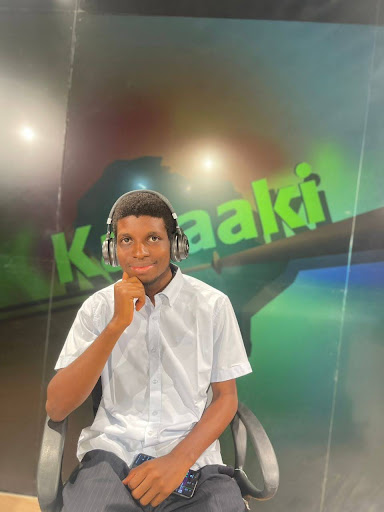
Francis Muojindu is navigating this environment with a unique combination of skills. A qualified lawyer, Francis first found his way into media through TV and radio before turning to writing. He’s since written regularly for many outlets in Nigeria and abroad and developed a clear focus - telling stories with lasting value.
In this interview, Francis shares his journey so far, what it’s really like trying to build a career in journalism today, how his legal background shapes his editorial interests and his view on the state of football media in Nigeria today. He also shares some of his long term ambitions to work at the intersection of communication, law and sport.
The interview has been condensed and lightly edited for grammar and clarity.
[ What inspired you to get into football journalism after finishing your law degree? ]
I've lived in Nigeria all my life. I was born in the capital city, Abuja, and apart from university, where I was in the southwestern part of Nigeria, have lived here all of my life. I grew up loving football - I really got into trouble in secondary school because I would always talk about football during class!
In university, my major was law, but as God would have it, midway through university, during a holiday period, I found myself in a newsroom - and the rest, they say, is history. I was 19, and it was summer break and my mom asked what I was going to do that summer, because I wasn’t going to just sit in her house not doing anything!
I’ve always been interested in media and been fascinated by what goes on behind the scenes in production and news coverage, so I applied for an internship at a TV channel. Internships are pretty common in Nigeria, and you can really learn a lot in them, but they’re difficult to get when it’s outside of your ‘normal’ career path or studies.
I remember during the interviews, they asked me, ‘Aren’t you supposed to be at a law office?’ But I really just enjoy football!
It took a long time to hear back, and in fact, I’d given up - but then the call from HR came, my internship had been approved! I became a research intern, working on the decks and helping to check the news.
One evening, a guest on one of the sports shows couldn’t make it to the studio, and one of the senior reporters suggested a ‘really intelligent and confident intern’ could work in place of the guest! The broadcaster was hesitant, especially because I’d never been on air before, but my producer gave him his word, encouraged him to try it out, and was ready to accept the blame if the show flopped. I didn’t find all of this out until later, but he really stuck his neck out for me!
I met the broadcaster, we went over some questions, and then the next thing he said was, ‘Meet me at the studio in 45 minutes, you’re going to join me live on air.'
[ Were the people around you surprised - or even disappointed - that you began taking journalism more seriously than law? ]
My family was really, really supportive, because then I had no money or anything, and in journalism, it takes time to grow and everything. My mom would give me transport money to go to work, and my dad would always ask me to tell him when I am on air. It was a thing of pride for my parents that I was doing that at a young age.
My classmates were wowed, honestly. For example, when I came back to class after the summer break, many of them had seen me on TV and were very impressed and interested in how I’d done it.
I was also very privileged with my Faculty at my university. I had really fantastic lecturers who saw that this is what I wanted to do and were really supportive. They even let me write my final year dissertation on performance enhancements and anti-doping in Nigerian sports! I was lucky to have these supportive teachers over the years, and they often gave me the advice, whatever you want to do, really try and do it well.
"whatever you want to do, really try and do it well"
[ Now you’ve worked for several different sites and companies - what is the process of getting these jobs as a new writer? ]
If you want to work in media, you have to really be up and about, your eyes have to be everywhere. In some ways, it’s the same as with law - law evolves and regulations change all the time - I try to translate these legal skills into journalism. You have to follow the latest news and trends. You have to know what’s happening, see what other people are writing and sometimes, just be online and read a lot.
Often, this is also how you get job opportunities. I’ve gotten jobs from the most unconventional places - just from a Twitter post or a random LinkedIn DM. I’ve not had any structured pathway - sometimes it’s a Google search to see who’s hiring, sometimes an opportunity can come through a comment section, there’s no hard and fast rule.
Recently, I joined redRondo, a Liverpool fan page, as a feature writer. There was no interview, it’s really based on samples they’ve seen, your previous writing, and them thinking I could be a good addition to the team. That’s pretty common for how the process works.
I only started writing in 2024, though I had already been in media, talking on TV and radio for a few years, and writing is a completely different ballgame.
For those who want to write, I would always say that you have to pray and prioritize having a great editor! A lot of the good work I’ve done has been with really good editorial support. A good editor can give really useful advice, suggestions, and help you to write something that people are actually interested in while avoiding common pitfalls.
Because journalism is a really brutal industry, especially when you’re starting, I’d always go for a place that will help you become a better writer.
"I’ve gotten jobs from the most unconventional places ... there’s no hard and fast rule"
[ Are the topics you write about ‘assigned’ or do you/can you come up with your own ideas for articles? ]
Most of the time, my editor picks the topics, but sometimes I can also take the initiative on what I will write about. For example, in October, I covered a major boxing story about how Oleksandr Usyk has conquered British boxing. That was my first time writing a boxing feature before but my editor thought I’d do well on it.
I’m really always open and try to treat any assignment as an opportunity to learn something.
[ Do you feel pressure to get views on your articles? (Do you see the metrics after each post?) ]
No, my current editor even says views are not really important and that telling genuine stories is much more important than chasing numbers and vanity metrics. So, I don’t feel pressured.
I want to publish stories that really matter, stories that are timeless and you can go back to because clicks and views are nice - and that’s how you earn money - but they vanish quickly.
For example, recently I read an article in The Athletic about the impact of climate change on sports. Now, that’s not the story that a typical football fan is going to want to read, especially in the last weeks of the January transfer window. But for me, it was the most important story I’d come across that week - the headline was that by 2050, only 10 countries will be able to host the Winter Olympics!
That’s really instructive. Maybe tomorrow or in the next 5-10 years, I’ll be working in policy - I still plan to use my law degree in sports! - This information will shape policy initiatives and investment decisions. These are the kind of stories that matter to me - stories that have long-term impact.
There are publications where you have to just keep churning out stories, and while I can do that, and those are usually better for the money, it can be difficult because the stories I really love and enjoy are the ones that take time.
[ Are there specific topics that you really want to write about or work on someday? ]
Yeah, one of my major goals this year is to grow my personal Substack. That was actually the first place I wrote back in 2024, before I started working for other online publications. I wrote a few articles about different topics like the Olympics from an African and Nigerian perspective, but this year, I want to start again on my personal Substack and write more there.
I'm very interested in sports financing at the moment. There are a lot of things happening with money in the game and things - like new board systems, more institutional capital going into sports, and new governance issues - that I really want to cover.
I also really want to write on policy from an African perspective, because our market is really ripe, but we have to tell our stories by ourselves. We have to see why things are not working and what we can do to bring lasting change.
For example, I am writing an article (coming out soon) for my Substack, looking at the potential for fan-owned clubs in Nigerian football and club financing more broadly for the Nigerian market. I also want to see if I can hold more interviews and share other people’s stories because storytelling is so important.
[ What trends in football journalism do you see? What’s changing? ]
Oh, I mean, the industry's going through a bloodbath. There’s been a lot of firing and people being replaced by AI tools - a lot of downsizing. But I still think there is a lot of room for positivity when we talk about journalism. We’re talking about telling stories from a human perspective, so while the industry is having a hard time, we’re still going to need people to tell the stories that matter.
Changes might not be through ‘traditional’ online publications as consumption patterns are changing, and we have to change with it. We’re going to see a lot more recruitment for content across TikTok, Instagram and so on as fan consumption patterns become more fragmented. So you need people - and companies - who can change and adapt towards different landscapes.
I believe YouTube is going to be much more important in the coming years - people who can create reels, or who can create compelling scripts, are going to have success, in part because of the dwindling reading culture and move to video.
I think long-form content will stay, though. Most of the time, AI overviews don’t give you proper in-depth knowledge in the same way and there are still some real limitations, especially around more current news and even more basic writing like match reports.
"We’re talking about telling stories from a human perspective, so while the industry is having a hard time, we’re still going to need people to tell the stories that matter"
[ You’ve worked with publications in both Nigeria and India - are cultural differences important in how football is covered around the world? ]
Sure, working with Indian writers, it’s much more fast paced! I think they are some of the hardest working people I’ve come across in my life - they are constantly working, I wonder when they find the time to sleep! So, even with very small teams, they’re still so efficient, and they seem to have a lot of shared desire or collective responsibility. In comparison, in Nigeria, it’s more common for everyone to handle their own business, and if it’s not your project or your shift, it doesn’t really concern you. Of course, there are exceptions, and my current team is one of the best I’ve worked with.
More generally, I think in Nigeria, our storytelling is really at an all-time low. We need to put much more into this. There are a couple of sites that are doing really well, like SoccerNet and Pulse, and I give it up to them, but generally, there are so many ‘clickbait’ stories and lots of recycled content. On the sports side, I don’t see a lot of initiative - especially beyond football.
Outside of football, there are not many sites covering sports, and while basketball, boxing, or golf aren’t the most followed sports in Nigeria, it still leaves many fans starved of good content locally. So, you have to depend on ESPN or other foreign media to follow these sports.
There's really so much more we can do.
[ It sounds like you have ambitious plans for your career - what does the future look like for you? ]
As I said, this year, I really want to tell more stories that matter. I want to connect with a lot of local clubs and academies that often suffer from really low visibility - I think a lot of clubs can benefit from harnessing the power of proper communication and creating more of a connection with their fans.
We’re still behind on a lot of local stories. For example, there was a player (Leonard Ngenge) who just moved from Remo Stars to Leeds United. An 18-year-old player moved from Remo Stars - the club that won the Nigeria Premier Football League - to the Premier League, and the club hadn’t even reported it! We just saw from other journalists that he was pictured upon his arrival at Leeds. This could have been a great opportunity for the club to have a proper presser and show his time at the club, his trajectory from the youth system, and to show there’s still a pathway for players to move from the local leagues - and not just the academies - to Europe.
I want to use communication to amplify local club stories, creating a synergy between the local fans, clubs and the players and also for potential investors to see the value in local sports.
In the medium term, I want to run my own practice supporting footballers from a legal point of view, offering support with everything from sporting disputes to taxation to contract talks to real property advisory in sports. I want to be an advisor who helps create systems for people to grow.
Long term, I want to be at the intersection of policy and management. I always tell people that sports involve more than just those on the field. African athletes, especially, have a difficult time with visa issues and traveling for tournaments and trials. I’d like to help build relationships and partnerships that enable easier movement for athletes and create sustainable growth for sports in Nigeria and Africa.