Football has never had more money in it. TV deals, sovereign wealth, private equity, sprawling multi-club networks - the numbers at the top of the game are huge. But most clubs aren't at the top of the game. For the vast majority, 90 minutes of football is the easy part. Everything around it from the ticket, the walk to the stadium, the queue for a beer, the moment the teams walk out - is where these clubs can get ahead.
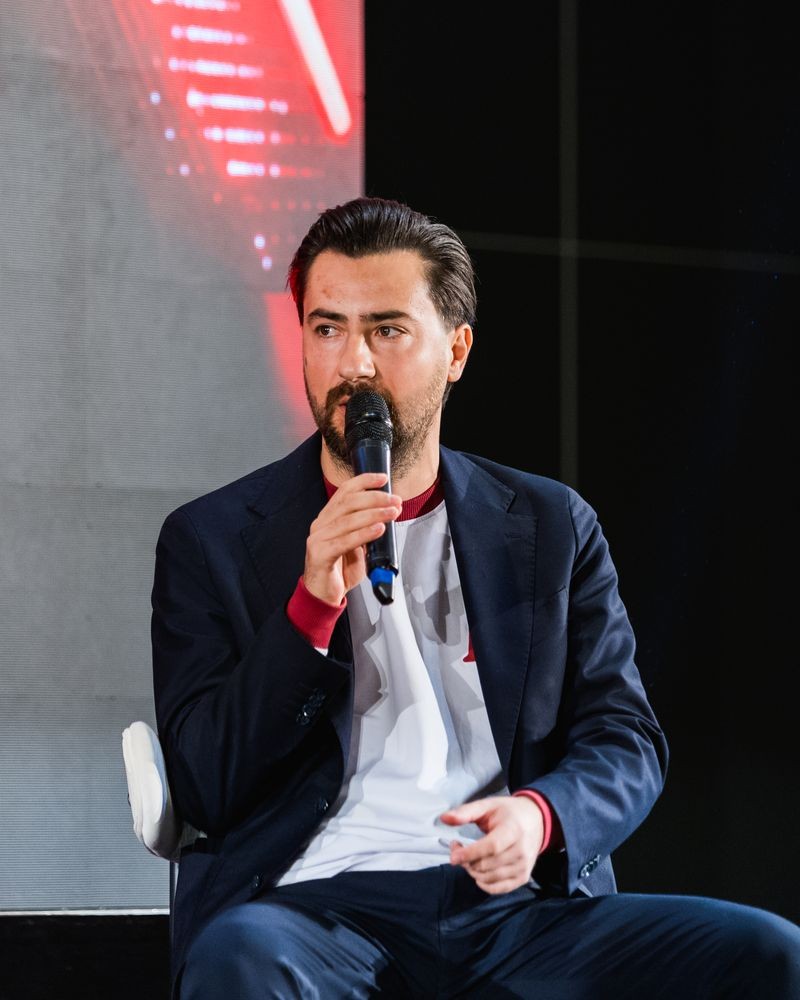
Daniel Carciug has lived the dream of so many football fans. A winding path inside and outside of football led him to his boyhood club, Rapid București. Quickly becoming a key figure at the club, his work designing the matchday experience impacted hundreds of thousands of fans over more than 6 years. Now, with everything he learned across ticketing, sponsorship and matchdays, he's built his own product to bring that experience to clubs around the world.
In this interview, Daniel shares stories from a career full of unlikely turns. He talks about deciding to follow his dream, creativity, resilience and what it’s really like to work in the business side of professional football.
The interview has been condensed and lightly edited for grammar and clarity.
[ Background ]
My dream of working in football happened in high school. In Romania, back in 2008, the internet was still at the beginning, to go online, we had to go to a computer lab. I remember going to the lab early in order to have more time to play games and just use the internet. I read the news about Adrian Mutu’s transfer to Fiorentina and I saw a picture of Mutu next to the president of Fiorentina.
At that time, I had just quit playing football - I realized that I wasn’t good enough! I was studying biology and my plan was to become a doctor - my parents were happy about that plan. But the moment I saw that picture of Mutu and the president of Fiorentina, I said, I want to be like him - not Mutu - but the president of Fiorentina!
From that moment, everything that happened in my mind was focused on becoming a football club manager. I changed to the management faculty at school. On the first day, I asked the dean if she can help me become a football club manager - her answer was, ‘no’. So, what did Daniel do for the next two years? Played FIFA career mode, watched a lot of documentaries and studied a lot of football clubs. I hardly attended any courses in my faculty but somehow still managed to get past all the exams.
My parents were concerned that I was struggling with my exams, I was just dreaming about football and they told me I had to ‘wake up’. I decided to not continue with this football idea and take a ‘real job’. One of my teachers believed so much in me, she liked my energy and my dream, and even said, ‘Daniel, you know what, you’re not one of my top students, but I think I have a paid internship for you this summer.’
[ AIESEC and a break from football ]
The company was building ships and they were running an experiment, trying to bring the best students from marketing, management, finance - all these business topics - together and assign them to a project. I met a guy who was working in project management. He was really good at speaking in public and had all these soft skills that are necessary to succeed. I asked him where he learned all this. He told me about AIESEC, an international student organization. I joined.
I spent the next 3 years of my life away from football, away from faculty, from everything. I was learning everything I could about business, sales, marketing, HR, everything. After 3 years, I was president of the organization and ‘managing’ over 100 students. I learned a lot. Probably know these kinds of people from your schools and so on. I thought, ‘I learned everything’ - why not get back to my dream?
[ Coming back to football ]
So, in 2017, I come back to my dream and I move from my hometown Galați to Bucharest. For 6 months, I tried everything.
I approached the Romanian Football Federation. But they didn’t have any jobs available.
Then I approached the Romanian first professional league (LPF) - it’s like the Premier League in England (separate governing body). I say, I can help your clubs get more fans and more sponsors. I met the marketing vice president, he was German-Romanian - he told me, ‘Daniel, run away! Find a normal job, forget about it.’ But they have no idea, I say, let me show you how it’s done in Romania my friend’.
I needed the contact from a club president, one in Bucharest. He gave it to me. I called the president, met with him, and explained all the problems I saw. He agreed and said, ‘let’s start working, do whatever you feel is necessary and get back to me after one month’.
So, I started at the club. I met all the employees and all of them started complaining about the president! Things were very basic, imagine, we had no color printer for the tickets - they were just black and white and colored by a person, like, a real person and then cut manually. It was like stepping back in a time machine. I approached a printing company close to the office and sorted out new tickets. I put up some basic sponsor banners in the stadium.
Then I learned we were giving the tickets away for free. Apparently, this decision had been made by the mayor. Okay, so I approached the mayor. I remember staying in front of city hall for a few hours. Finally the mayor came outside - I had to check a picture on my phone to see if it was really him. I asked him about the tickets but he was firm, as long as he was mayor, all the tickets would be free. The president was really upset that I did this and basically, didn’t want to speak with me. I was left alone in the club, so I left.
[ First steps in football entrepreneurship ]
I moved to another football club in the first league. The press officer said, ‘Daniel, you are a young guy, please, come on, you are wasting your time here. They don't want to do anything, so they pay me to do nothing. That's my job description.’
At that time, I had no money. My girlfriend was like, ‘Daniel, you are too smart for this industry. Get a job. You can take whatever job you want.’
Still, I said no. I want to pursue my dream.
Then, while I was volunteering at the Football Federation, I met a Canadian guy. I was responsible for the VIP area and he tried to buy my pass or my jacket in order to get on the pitch! Anyway, he told me that he had a company that builds mobile apps for football clubs. On the spot, I built a marketing plan for him - he must have been impressed because the next day, he offered me a job.
For a year or so, I was selling mobile apps for football clubs around the world. And then, this guy sold the company to Sportsradar and disappeared! I helped him build the company, I even built ~90% of the apps and that was it.
Still, it was a very cool experience for me because I met a lot of people around the world.
[ EA Sports and ticketing ]
The FIFA game, EA Sports FC now, was built in Bucharest. So, I was playing a lot of FIFA and I became friends with a lot of EA Sports employees. I was part of the team that prepared the club's social media channels to be ready for the FIFA 19 edition. Continuing to work with the LPF, one of the ticket companies asked, ‘why are you not working for us?’. So I moved from the first league to a ticketing company. I brought them almost all the clubs from the first league as customers and I also brought them a club that was in the second league at the time, Rapid - my boyhood club.
[ Joining Rapid București ]
I joined Rapid full time in January 2020. We were in the second league at that time, we had no stadium, no people, no money, not even any branding as this was disputed because of the club’s bankruptcy and the new entity had to buy the rights. We didn’t have a fan shop or anything because the previous kit manager had stolen all the clothes and we couldn’t get more from Macron.
There were 3 other people in the club, the president, the security guy, a social media guy and me. The security guy was basically the ‘founder’ of the club. He was a taxi driver who had sold his house to start the club over (after bankruptcy)!
So that was my context at that time.
I decided to make my first move. I opened a new internship program. This is how you get a lot of talented young people coming into the club. I spoke with a teacher at a business faculty and explained my idea. But she was a fan of Steaua - so she gave me, er, not the best students! Still, we managed to get some interns.
At the end of the season, we were not promoted to the first league and had to stay one more season in the second league. So, I have to deal with Macron. Macron wants their money, I remember we owed something in the range of €100,000. That season, the pandemic really killed us. So, during the next season, we ran a season ticket campaign where if you buy a season ticket, you also get a jersey - and several different packages like this. It went well and this is how we were able to pay the debts to Macron.
At the start of the new season, things were going okay but because of the pandemic, nobody wanted to assume the debts and I even became CEO for a few months. Anyway, during our fifth game, the government finally allowed fans back into stadiums. I’ll never forget the first match. We borrowed a university stadium and we had to pay a lot of people to do all the small jobs on a matchday - medical, the scoreboard needed to be changed manually, etc. But the problem I remember is that all the people helping us were drunk the whole time! At one point, they had to bring the stretcher out onto the field for an injury and they dropped the player. I was trying to get new sponsors and was with a potential sponsor trying to explain that we’re going to become a serious club and so on. At the half time break, the sponsor shook my hand and said, ‘we’ll see you soon’. I never saw that guy again.
"I joined Rapid full time in January 2020. We were in the second league at that time, we had no stadium, no people, no money, not even any branding as this was disputed because of the club’s bankruptcy and the new entity had to buy the rights"
[ Ultras and fan pressure ]
Anyway, in my first year - the pandemic year, I managed to bring in a few sponsors. After we didn’t get promoted the ultras were so upset. It was a nightmare - we couldn’t leave the stadium after the game. 4 hours after the game, we had to call the police just to help us get outside. They had destroyed everything, our machines, our cars and even my sponsor banners!
In the second season, we started really badly. We had to replace the coach, a very traditional coach. We replaced him with a very young coach, part of this new wave of coaches. Then, 3 games before the playoff, we needed to win all 3 games to qualify. The president was so scared because he would be fired if the team was not promoted. The coach resigned just before this. So we remained with the assistant coach - someone who had been a gas station attendant - that helps you know the level. But he said confidently, ‘we’re going to win the next three matches’, so everybody was afraid to replace him!
He approached me with a favor. He wanted to have a barbecue after every training session. I was like, come on, are you crazy? We can’t do that! But he insisted, ‘if you bring me that, I’m going to give you the promotion’. Somehow, the guy did it. He didn’t care about tactics, he just wanted the players to feel good, he’d say ‘joga bonito’ all the time! But somehow, we won the matches.
That’s how we got promoted back to the first division. Just 5 years before Rapid was all the way down in the 5th division. Remember the taxi driver, he was the owner of the club, imagine that.
[ Promotion and a new president ]
After promotion, Rapid got a new president. He came in with his own people and wanted to get rid of all the employees brought in by the previous president because he believed that we are loyal to the old boss. My new boss and my former boss hated each other. He tried to get rid of me - I remember I my salary was €700, I asked for a raise to at least €1,000 but the new owner said, no, no, it’s too much but the new guy they wanted to hire was asking for like €5,000, so they decided to keep me after all.
I continued to do all kinds of jobs - I was the marketing manager, the commercial manager, then also the sponsorship manager until they said, no, you have too much power and so, I just did sponsorship stuff after that.
In 2022, I was the one who ran the inauguration for the Rapid’s new stadium. Then in 2023, I did the anniversary, the centenary of the club. It was the project of my life. The opportunity to lead this kind of event for the club that I support was just amazing. I was there at the perfect moment in Rapid’s history.
Then, the new owner came, a very rich guy in Romania. He has two kids who are youth players who wanted to play for Rapid because our youth training ground was near them and were playing well. So, he said, ‘you know what, I’m going to buy the club!’
The new owner needs somebody who speaks business and the only one in the club who knew all the business stuff was me. I remember staying two days with him, explaining the business model, all the opportunities, and so on. I gave him the entire business picture.
Then, he said again, he wants to get rid of all the employees and bring in his own guys. So, I have to win him over again. He liked me but at the same time, he didn’t trust me. He gave me a lot of tests, especially bribery and placing people to try to give me money and all this kind of stuff. It was a little crazy but Romanians are very suspicious!
Anyway, I managed to prove to him I was worthy of his trust and he gave me a lot of freedom in the commercial side. I worked a lot on connecting all the revenue streams under the matchday umbrella.
One day, he came to me and said, ‘I think I have an offer to buy Genoa’. I worked on a lot of the assessments and he gave me the opportunity and responsibility to build the multi-club ownership structure. So, I started working with Genoa too. It was an unbelievable experience. Understanding how Serie A operates - and I can say that Serie A is not at the level that it should be. Not to be too harsh but they are so outdated. It was a shock for me to discover that almost half of the Serie A clubs don’t have a sponsorship manager.
"He gave me a lot of tests, especially bribery and placing people to try to give me money"
[ Leaving Rapid ]
By then I was doing a lot of commercial things which generated money - that gives you a lot of power in the club. When I resigned after more than 6 years at Rapid, the owner said, ‘you are more powerful than me!’. I was responsible for almost €8 million in revenue, a huge amount for the club.
Looking back now on my time at Rapid, besides all this money generated for the club’s bank account, there are two things I’m very proud of.
First is the volunteering program. Rapid, at this moment, has the most developed volunteering program in Europe, much better than any football club in the world. We have 150 active volunteers under a clear structure. We have volunteer departments with coordinators and team leaders across every aspect of the club - hospitality, accreditation, media, sponsorship, the opening ceremony, even each tribune in the stadium!
Second is the matchday. If you came to a match at Rapid during my time as matchday manager, the Rapid Stadium experience is incredible. If you have the chance, you should experience it.
Despite our sporting performance, we’re in the middle of the table - and Rapid fans believe we should be champion, we have one of the highest attendance in the first league. I designed this experience. It’s not only about the way I organize a match, it’s about the experience a fan has from the moment they consider buying a ticket. It’s about taking all my knowledge and learnings from everything I tried at Rapid and Genoa and all the matches I’ve attended.
Now I’ve turned this methodology into a platform called Matchday Operating System and I’m selling it to football clubs and leagues all over the world.
"Rapid, at this moment, has the most developed volunteering program in Europe, much better than any football club in the world"
[ What is the idea behind your methodology? ]
So, I love going to the theatre and attend a lot of dramas and all kinds of performances. I took the concepts of ‘acts’ from theatre and repurposed them for football. There are, essentially, 5 acts: pre-match, the first half, half time, the second half and the post-game.
Each act is built through moments. For example, during the pre-match alone, you have the team arrival, the pitch inspection, the preparation for warm-up, warm-up, warm-up exit, opening ceremony and finally kick off. All of these moments should be considered to build the best experience.
This is my methodology and what I’m working with clubs on now.
[ When you think about fan experience, how do you consider fans who are not in the stadium? Are there things that would benefit fans in the stadium but are a detriment to fans watching on TV - or vice versa? ]
What clubs should understand is, the most important fan is the one that is coming to the stadium. That's the first principle.
At the same time, if you are a global club like Manchester United, Real Madrid, Barcelona and so on, you cannot hold your entire fan base in the stadium. That’s why it’s important how you engage with the fans who are not attending matches because they are still watching, living and breathing your club through other platforms. And the big clubs have found out that TV is one of the answers. But still, clubs should always think about how to attract more people to their games because this is how you raise the ticket price and how you make money.
My matchday methodology is about engagement but when I’m approaching a football club CEO and tell them, I’m going to increase the engagement in the stadium, they’ll ask why. To make money.
You have to think all the time about these two ways of consuming the club - in the stadium and outside the stadium. The stadium is just a bridge, it’s a way of consuming your club and okay, it’s the most intense one and the most important one - but there are many other ways.
[ How do you measure matchday experience? ]
When I was at Rapid, I had two big surveys. One in the middle of the season and one at the end of the season. Normally, we’d get around 1,000 answers, which is more than enough.
When we measure the fan experience, we take the entire journey - from the moment the last match ends until the new match ends. You want to know how they get in touch with the club, which channels they use, what kind of content they want, how they want to be informed about the next match, what information they need and so on.
Once they enter the stadium, you have a lot of questions like, how do you find the seats? How do you find the food and drinks? And all those kinds of things. So, surveys are one way of measuring.
But, for example, now I’m using my own methodology to analyze a match when I go to a stadium. I look at every moment, every channel and take note of what they are doing. Like, okay, the pitch inspection - how did they build it? Did it lead to something great or not? And you just give them a grade.
So many clubs are doing nothing. They are not investing in anything to improve the experience. I had a discussion with a betting company owner in Tbilisi who was sponsoring four clubs in the first league. I asked why are they sponsoring these clubs? He replied it’s good for the image, but how do you make money? I was at one of his sponsored clubs, Dinamo Tbilisi against Mondorf-les-Bains and they started the music and opened the billboard less than 30 minutes before the kickoff. As a fan, why should I attend your game 2 hours before, have a drink in the stadium, consume your merchandise, etc if you give me no reason to do that?
This is how I’m measuring - it depends on if I’m the matchday manager and the survey or as a consultant with my methodology.
[ There has been a lot of bad feeling around the level of commercialization of football for years but the most recent World Cup brought this even more to the forefront. What do you think about this? Do you wish to (or feel the need to) separate your work from these kinds of headlines? ]
I have a very strong opinion here. And you're gonna see that it's different.
I don't think ‘entertainment’ is too much, or is bad. If it’s organic engagement and you commercialize that engagement, it’s normal. Absolutely normal. Entertainment and commercialization are attached.
Europe is completely different from the United States. We are not an entertainment continent! For the United States, it’s completely normal. You have your Super Bowl and you want to do that.
We have to understand that an event that’s happening in the United States, with the United States’ way of doing things, will look different to European eyes.
But, to be clear, I’m not a fan of commercialization for the sake of commercialization. I’m a fan of the Matchday OS methodology. What I’m doing through matchdays is offering you to consume the club identity, the club culture. If I’m putting so much focus on advertising, on revenue streams, the fans are going to wonder what is going on?!
If you spend too much time on ads, you’ll also miss your moment to make an impact commercially. For example, I was so upset by this club at a recent match I attended. The first thing they did as soon as the ref blew for half time was put on advertising. Come on, I need to catch my breath from the first half - and you’re giving me a commercial? Wait a little bit! Put anything except a commercial. Then, if the engagement is good and the fans like your content, they will almost ask you for the commercial. You have to create demand and they will come back with a desire.
Instead, if you give fans the opportunity to consume the club heritage - the history, the players, the heroes we are proud of, etc - it’s absolutely normal to align that commercial moment.
[ What are some trends you see or predict we’ll soon see related to fan experience and football business more broadly? ]
Today's football is ‘too boring’ for most fans. It’s already happening but in the next 10 years, people will not be able to watch a football match without a second screen. It won’t matter where they are watching it. People will want to see, was that a penalty or not? The team is losing, what are the fans saying?
So, football will have to adapt. You see it with the hydration break already, it’s a little unbelievable but it’s great because it gives fans a break. Attention spans are so low, that the game needs to adjust. Otherwise, the game will lose the fan base.
My theory about football - and sports in general - is that it distracts you from your own life. During those 2 hours, or 90 minutes, you are distracted from your life and enter a new reality - and in that reality, you need to experience a new life.
Another big trend needs a little bit of context. When you buy a ticket and enter a stadium, that’s your ‘first level’ experience. Then, you want some food or something to drink, that’s your second level. Maybe you want a jersey, that’s your next product. At some point, you’ll say, I want a better seat, so you’ll buy the VIP ticket. Then maybe you get more money, become a successful businessman and you want the SkyBox.
You’re always looking for the next desire, the next ‘need’. This is leading to something I called the experience as a whole. People want to see games from the pitch level. They want to meet the players or get an autograph.
So, these experiences are the next big trend along with the information that fans will need in order to enhance their watching experience - things like new stats, replays, camera angles.
"Today's football is ‘too boring’ for most fans ... in the next 10 years, people will not be able to watch a football match without a second screen"
[ For who is Matchday OS most useful for? What are some of your goals for the future? ]
Now, I'm discussing with a lot of football clubs, leagues, federations, brands, ticketing companies and betting companies. Matchday OS can be implemented by anyone from a fourth league club to a Champions League winner, the size of the club doesn’t matter.
My goal is to build this business. It’s also not just me, I have a team here in Romania around me. I know the system because I developed it, and I know it can grow. I also want to build a business around experiences. There are different angles that we could do but for example, in Georgia I met with a few companies that are doing an amazing job with club and ticketing experiences. Taking people to matches but also around the major areas of a city.
I think there is a great opportunity to add more football services. There are a lot of connected business opportunities and not enough people are thinking like entrepreneurs in this industry. We always just think about working in a football club or a football body. We should focus on solving the needs and fulfill the desires of the stakeholders - and there are still so many opportunities.